ENSIKLOPEDIA
Portal:Films
 | Portal maintenance status: (June 2018)
|
The Film Portal

 A film, movie, or motion picture is a work of visual art that simulates experiences and otherwise communicates ideas, stories, perceptions, emotions, or atmosphere through the use of moving images that are generally, since the 1930s, synchronized with sound and sometimes using other sensory stimuli.
Films are produced by recording actual people and objects with cameras or by creating them using animation techniques and special effects. They comprise a series of individual frames, but when these images are shown rapidly in succession, the illusion of motion is given to the viewer. Flickering between frames is not seen due to an effect known as persistence of vision, whereby the eye retains a visual image for a fraction of a second after the source has been removed. Also of relevance is what causes the perception of motion: a psychological effect identified as beta movement. (Full article...)
Featured articles - load new batch
 Featured articles are displayed here, which represent some of the best content on English Wikipedia.
Star Trek Beyond is a 2016 American science fiction action film directed by Justin Lin, and written by Simon Pegg and Doug Jung. It is the 13th installment in the Star Trek franchise and the third installment in the reboot series, serving as the sequel to Star Trek (2009) and Star Trek Into Darkness (2013). Chris Pine and Zachary Quinto reprise their respective roles as Captain James T. Kirk and Commander Spock, with Pegg, Karl Urban, Zoe Saldaña, John Cho, and Anton Yelchin reprising their roles from the previous films. Idris Elba, Sofia Boutella, Joe Taslim, and Lydia Wilson also appear.
Principal photography began in Vancouver on June 25, 2015. Two weeks after its Sydney premiere, it was released in the United States on July 22, 2016, by Paramount Pictures. The film is dedicated to the memory of Yelchin and actor Leonard Nimoy, who both died before the film was released. The film grossed $343.5 million at the box office, and received positive reviews from critics. At the 89th Academy Awards, the film was nominated for Best Makeup and Hairstyling. A sequel entered development but was ultimately canceled. (Portal:Film/Featured content)
General images - load new batch

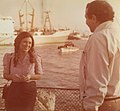
 Image 3A frame from the Lumière brothers staged comedy film, L'Arroseur Arrosé (1895) (from History of film)
 Image 4Max Skladanowsky (right) in 1934 with his brother Eugen and the Bioscop (from History of film technology)
 Image 5A.E. Smith filming The Bargain Fiend in the Vitagraph Studios in 1907. Arc floodlights hang overhead. (from History of film)
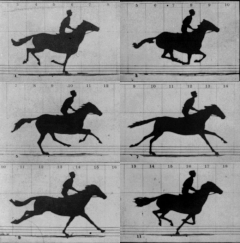 Image 7GIF animation from retouched pictures of The Horse in Motion by Eadweard Muybridge (1879). (from History of film technology)
 Image 8Oskar Messter (from History of film)
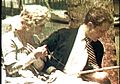 Image 10A surviving two-color-component image from the first Technicolor feature film, The Gulf Between (1917) (from History of film technology)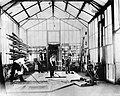


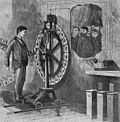 Image 17An electrotachyscope(from History of film technology)
American Scientific, 16/11/1889, p. 303
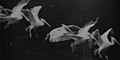 Image 19Flying pelican captured by Marey around 1882. He created a method of recording several phases of movement superimposed into one photograph (from History of film technology)
 Image 20Theater ticket sales revenue has declined since the mid-2010s. Theater revenue did not fully recover from declines during the COVID-19 pandemic when many theaters were closed. (from Film industry)
 Image 21The Babelsberg Studio near Berlin, the earliest large-scale film studio complex (founded 1912). Today its one of the major film studios worldwide. (from History of film)
 Image 23Discounted DVD home video film releases sold in the Netherlands (from Film industry)
 Image 24Original script from the 1989 film Batman (from History of film)
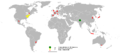 Image 25Cinema admissions in 1995 (from History of film)
![Image 26Louis Poyet [fr]'s engraving of the mechanism of the "fusil photographique" as published in La Nature (April 1882) (from History of film technology)](//upload.wikimedia.org/wikipedia/commons/thumb/f/f0/Fusil_photographique_Marey2.png/120px-Fusil_photographique_Marey2.png) Image 26Louis Poyet [fr]'s engraving of the mechanism of the "fusil photographique" as published in La Nature (April 1882) (from History of film technology)
Image 26Louis Poyet [fr]'s engraving of the mechanism of the "fusil photographique" as published in La Nature (April 1882) (from History of film technology) Image 27A scene from Raja Harishchandra (1913) – credited as the first full-length Indian motion picture. (from Film industry)
 Image 28Off Plus Camera Film Festival in Kraków, 2012, with Andrzej Seweryn, Daniel Olbrychski, and Wojciech Pszoniak on stage. (from Film industry)
 Image 30A production scene from the 1950 Hollywood film Julius Caesar starring Charlton Heston (from History of film)
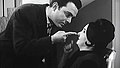 Image 31Publicity still for the Egyptian film My Wife, the Director General (1966) (from Film industry)


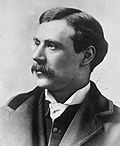 Image 35William Friese-Greene (from Film industry)
 Image 36The Jazz Singer (1927), was the first full-length film with synchronized sound. (from History of film technology)
 Image 37The first two shots of As Seen Through a Telescope (1900), with the telescope POV simulated by the circular mask (from History of film)
 Image 38Animated GIF of Prof. Stampfer's Stroboscopische Scheibe No. X (Trentsensky & Vieweg 1833) (from History of film technology)
- Image 39The Babelsberg Studio near Berlin was the first large-scale film studio in the world (founded 1912) and the forerunner to Hollywood. It still produces global blockbusters every year. (from Film industry)
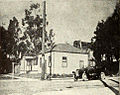 Image 40Nestor studio, 1911 (from Film industry)


 Image 44Don Juan is the first feature-length film to use the Vitaphone sound-on-disc sound system with a synchronized musical score and sound effects, though it has no spoken dialogue. (from History of film)
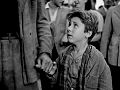 Image 45Italian neorealist movie Bicycle Thieves (1948) by Vittorio De Sica, considered part of the canon of classic cinema (from History of film)
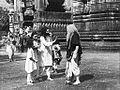
 Image 48London IMAX has the largest cinema screen in Britain with a total screen size of 520 m2. (from Film industry)
 Image 49Poster for the 1956 Egyptian film Wakeful Eyes starring Salah Zulfikar and Shadia (from History of film)
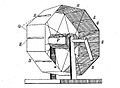 Image 50Czermak's 1855 Stereophoroskop (from History of film technology)


,_перешедший_в_общественное_достояние.jpg)


.jpg)


.jpg)

![Image 26Louis Poyet [fr]'s engraving of the mechanism of the "fusil photographique" as published in La Nature (April 1882) (from History of film technology)](?wiki_title=File:Fusil_photographique_Marey2.png)


.jpg)


_(crop).jpg)
Selected image

| Credit: Stephanie Kemna |
The Shrine Auditorium, site of the 60th Annual Academy Awards. The Academy Awards, popularly known as the Oscars, are presented annually by the Academy of Motion Picture Arts and Sciences (AMPAS) to recognize excellence of professionals in the film industry, including directors, actors, and writers.
Did you know...
- ... that Nicolas Cage was trained by award-winning chef Gabriel Rucker for one of his films?
- ... that a tram chase sequence in a 2025 adventure film was shot in two different theme parks, and with two different trams?
- ... that Savannah Bond sold cosmetics before entering the adult film industry?
- ... that Marva Nabili, a member of the Iranian New Wave, made a "haunting" film about the struggles of a family in Manhattan's Chinatown?
- ... that the 1976 Philippine film Itim was described as "one of the most remarkable debuts in cinema history" in a 2022 retrospective at the Museum of Modern Art?
Selected biography - show another
.JPG)
Cecil Blount DeMille (/ˈsɛsəl dəˈmɪl/; August 12, 1881 – January 21, 1959), often known in popular culture as Mr. DeMille, was an American filmmaker and actor. Between 1914 and 1958, he created 70 features including silent and sound films. He is acknowledged as a founding father of American cinema and the most commercially successful producer-director in film history, with many films dominating the box office three or four at a time. His films were distinguished by their epic scale and by his cinematic showmanship. His silent films included social dramas, comedies, Westerns, farces, morality plays, and historical pageants.
Born in Ashfield, Massachusetts, and raised in New York City, DeMille began his career as a stage actor in 1900. He later began to write and direct stage plays, a few with his older brother William de Mille, and some with Jesse L. Lasky, who was then a vaudeville producer. DeMille's first film, The Squaw Man (1914), was the first full-length feature film shot in Hollywood. Its interracial love story was commercially successful, and the film marked Hollywood as the new home of the U.S. film industry. Based on continued film successes, DeMille founded Famous Players-Lasky, which was later reverse merged into Paramount Pictures with Lasky and Adolph Zukor. His first biblical epic, The Ten Commandments (1923), was both a critical and commercial success; it held the Paramount revenue record for 25 years. (Full article...)
Featured lists - load new batch
Per a review process, Featured lists are considered to be the best list articles on English Wikipedia. Image 1
 Stone at the 2005 Cannes Film Festival
American actress Sharon Stone has won 11 awards from 42 nominations, including one Emmy Award, one Golden Globe Award, two MTV Movie Awards, and one Satellite Award. She has also received several "dishonors" for poor performances in films, earning three Golden Raspberry Awards, and two Stinkers Bad Movie Awards.
Stone's breakout role as Catherine Tramell in Basic Instinct (1992) earned her a Chicago Film Critics Association Award, Golden Globe Award, and Saturn Award nominations. This was followed by two nominations for MTV Movie Award for Most Desirable Female for the films Sliver (1993) and The Specialist (1994). For her role as Ginger McKenna in Casino (1995), she won the Golden Globe Award for Best Actress in a Motion Picture – Drama and received an Academy Award nomination, in the Best Actress category. She guest starred as an attorney who believes she can communicate with God in The Practice (1997–2004), a role that earned her the Primetime Emmy Award for Outstanding Guest Actress in a Drama Series. In Basic Instinct 2 (2006), her return to the character Tramell received mixed critical reviews, and garnered her a Golden Raspberry Award. (Full article...)- Image 2

Doherty attending the premiere of 90210 in 2008
American actress Shannen Doherty (1971–2024) appeared in numerous television programs and motion pictures. After her television debut in Father Murphy in 1981, she landed her first major role in the dramatic western television series Little House on the Prairie (1982–1983), and reprised her role in its three television specials. Doherty received two Young Artist Award nominations for playing the oldest Witherspoon sibling Kris in the family drama Our House (1986–1988). She appeared in four films during the 1980s, including the positively-received, animated film The Secret of NIMH (1982) and the cult classic Heathers (1988). Her breakthrough role was as Brenda Walsh in the teen drama Beverly Hills, 90210 (1990–1994), but she was later dropped from the series because of backstage issues and her negative image as a "bad girl". She starred in television films in the early and mid-1990s, and played Rene Mosier in the romantic comedy Mallrats (1995) in an attempt to rebuild her career.
Doherty enjoyed a resurgence in popularity after being cast by producer Aaron Spelling to play Prue Halliwell on the supernatural drama Charmed (1998–2001). The series was their second collaboration following Beverly Hills, 90210. The character was praised by critics and fans, earning a spot as one of the best witches in television history according to a TVLine article, and Doherty took an active role in the show's production, directing three of its episodes. Following disagreements with Spelling and co-star Alyssa Milano, Doherty left the series in its third season. Doherty starred in a string of television films and had a recurring role on the prime-time soap opera North Shore (2004–2005). The following year, she was cast as Denise Johnson in the unaired pilot of the sitcom Love, Inc., but was dropped from the show by producers from United Paramount Network (UPN). She reprised her role as Brenda Walsh in the reboot of 90210 (2008–2009), appearing as a special guest star in seven episodes in its first season. (Full article...) - Image 3Stanley Kubrick (1928–1999) was an American filmmaker and photographer. He directed thirteen feature films and three short documentaries over the course of his career. His work as a director, spanning diverse genres, is regarded as highly influential.
Kubrick made his directorial debut in 1951 with the documentary short Day of the Fight, followed by Flying Padre later that year. In 1953, he directed his first feature film, Fear and Desire. The anti-war allegory's themes reappeared in his later films. His next works were the film noir pictures Killer's Kiss (1955) and The Killing (1956). Critic Roger Ebert praised The Killing and retrospectively called it Kubrick's "first mature feature". Kubrick then directed two Hollywood films starring Kirk Douglas: Paths of Glory (1957) and Spartacus (1960). The latter won the Golden Globe Award for Best Motion Picture – Drama. His next film was Lolita (1962), an adaptation of Vladimir Nabokov's novel of the same name. It was nominated for the Academy Award for Best Adapted Screenplay. His 1964 film, the Cold War satire Dr. Strangelove featuring Peter Sellers and George C. Scott, received the BAFTA Award for Best Film. Along with The Killing, it remains the highest rated film directed by Kubrick according to Rotten Tomatoes. (Full article...) - Image 4

Mahesh Babu is an Indian actor and producer known for his work in Telugu cinema. He first appeared in the 1979 film Needa when he was four years old. He continued to perform as a child actor in several films, most of which featured his father Krishna. Following his role as the titular protagonist in Balachandrudu (1990) while still a child, his career went on hiatus so he could concentrate on his education until taking on his first lead role as an adult in the 1999 film Rajakumarudu, for which he won the Nandi Award for Best Male Debut. Afterwards, his career stagnated until successes like Murari (2001), Okkadu (2003) and Athadu (2005) brought him fame. In 2006, he played a gangster in the Puri Jagannadh-directed action-thriller Pokiri. The film became the highest-grossing Telugu film of all time, and according to Vogue India, cemented Babu's reputation as a "superstar"..Pokiri was released on 28 April 2006. The film grossed over ₹70 crore worldwide in its initial theatrical run and was declared an Industry Hit while remaining as the highest-grossing Telugu film for three years until it was surpassed by Magadheera in 2009. It also became the highest-grossing South Indian film in its original run, surpassing Chandramukhi, and became the first South Indian film to gross over ₹60 and ₹70 crore in a single language. The film altered the landscape of Telugu commercial cinema. It solidified Mahesh Babu's status as a star, transitioning his image from a charming youth icon" to a formidable mass hero.
In the wake of the failures of Sainikudu (2006) and Athidhi (2007), Babu took a long-term break from cinema for personal reasons. His next project, the fantasy action film Khaleja, was released in 2010 after significant delays. In 2011, he starred in Dookudu, which became the first Telugu film to gross over ₹1 billion. Businessman (2012), his next film, was well received and became one of the year's highest grossing Telugu films at a time that was particularly harsh on other big-budget productions. The following year, Babu co-starred alongside Venkatesh in the critically and commercially acclaimed drama film Seethamma Vakitlo Sirimalle Chettu, which was considered the first Telugu multi-starrer in decades..Seethamma Vakitlo Sirimalle Chettu netted ₹38.75 crore at the AP/Nizam box office during its run,[citation needed] earning a distributor share of ₹51 crore at the global box office and declared a commercial success.. He then featured in Sukumar's 2014 psychological thriller film 1: Nenokkadine. Although Babu's performance as a schizophrenic rock star was lauded by critics, the film itself received mixed reviews and failed to recover its budget. Aagadu, his next release that year, suffered a similar fate,.The film received mixed reviews, with praise directed towards its music, cinematography, action sequences, and Mahesh Babu's performance. However, the complexity of the screenplay and its length garnered criticism. The film eventually became a box office failure. It won three awards from eight nominations at the 4th SIIMA Awards and two awards at the 11th CineMAA Awards. Over time, the film was reevaluated and gained a cult following for its unique narrative, technical finesse and Babu's performance. It was also listed among Film Companion's "25 Greatest Telugu Films of the Decade." despite the film's opening gross being his highest at the time. (Full article...) - Image 5

Leeteuk during Kiss The Radio public broadcast in 2009
Leeteuk is a South Korean singer-songwriter and television host. He is the leader of the K-pop boy band Super Junior and its subgroups, Super Junior-T, Super Junior-Happy, and Super Junior-L.S.S. He has hosted numerous television programs and award shows, and acted in several films and television dramas in cameo or supporting roles. He made his television debut with a bit part appearance in the drama All About Eve in 2000. He has since acted in Dream High (2011), All My Love For You (2011), My Bittersweet Life (2011), Salamander Guru and The Shadows (2012), Persevere, Goo Hae Ra (2015), Borg Mom (2017), Secret Queen Makers (2018) and Work Later, Drink Now (2021).
After debuting with the boy band Super Junior in 2005, he participated in several Super Junior–centric television shows; Super Junior Show (2005–2006), Super Adonis Camp (2006), Super Junior Mini-Drama (2006), and television dramas; Mystery 6 (2006) and Super Junior Unbelievable Story (2008). He made his film debut by acting in Attack on the Pin-Up Boys (2007) which featured all members of the boy band except Kyuhyun who was injured. He participated in the concert documentary films I Am (2012) and SM Town The Stage (2015), which were screened in selected cinemas. He became a radio DJ through the radio programs Leeteuk's Music Show which aired on TBS in 2006 and Super Junior Kiss the Radio (Sukira) which was aired on KBS Cool FM from 2006 until 2011, and for a few months in 2016. (Full article...) - Image 6
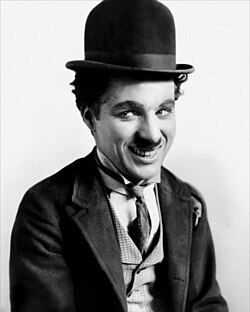
Chaplin in his "Tramp" persona
Charlie Chaplin (1889–1977) was an English internationally renowned Academy Award-winning comic actor, filmmaker, and composer who was best known for his career in Hollywood motion pictures from his debut in 1914 until 1952, he however subsequently appeared in two films in his native England. During his early years in the era of silent film, he rose to prominence as a worldwide cinematic idol renowned for his tramp persona. In the 1910s and 1920s, he was considered the most famous person on the planet.
Chaplin was born in Walworth, South London, and began acting on stage at the age of five when his mother's voice cracked. In 1913, while on tour in the United States with Fred Karno's comedy group, he accepted a contract to work for Keystone Film Company. During his time at Keystone, he began writing and directing some of the films in which he starred. Chaplin signed with the Essanay Film Manufacturing Company in 1915, and the year after with the Mutual Film Corporation. (Full article...) - Image 7The 93rd Academy Awards ceremony, presented by the Academy of Motion Picture Arts and Sciences (AMPAS), honored films released from January 1, 2020, to February 28, 2021, at Union Station in Los Angeles. The ceremony was held on April 25, 2021, rather than its usual late-February date due to the COVID-19 pandemic. During the ceremony, the AMPAS presented Academy Awards (commonly referred to as Oscars) in 23 categories. The ceremony, televised in the United States by ABC, was produced by Jesse Collins, Stacey Sher, and Steven Soderbergh, and was directed by Glenn Weiss. For the third consecutive year, the ceremony had no official host. In related events, the Academy Scientific and Technical Awards were presented by host Nia DaCosta on February 13, 2021, in a virtual ceremony.
Nomadland won three awards at the main ceremony, including Best Picture. Other winners included The Father, Judas and the Black Messiah, Ma Rainey's Black Bottom, Mank, Soul and Sound of Metal with two awards each, and Another Round, Colette, If Anything Happens I Love You, Minari, My Octopus Teacher, Promising Young Woman, Tenet, and Two Distant Strangers with one. The telecast received mostly negative reviews, and it garnered 10.4 million viewers, making it the least-watched Oscar broadcast since viewership records began for the 46th ceremony in 1974. (Full article...) - Image 8
The Hong Kong Film Award for Best Actress is an award presented annually at the Hong Kong Film Awards (HKFA). It is given to honour an actress who has delivered an outstanding performance in a Hong Kong film.[Note 1] The 1st Hong Kong Film Awards ceremony was held in 1982, with no formal nomination procedure established; the award was given to Kara Wai for her role in My Young Auntie. After the first award ceremony, a nomination system was put in place whereby no more than five nominations are made for each category and each entry is selected through two rounds of voting. Firstly, prospective nominees are marked with a weight of 50% each from HKFA voters and a hundred professional adjudicators, contributing towards a final score with which the top five nominees advance to the second round of voting. The winner is then selected via a scoring process where 55% of the vote comes from 55 professional adjudicators, 25% from representatives of the Hong Kong Performing Artistes Guild and 20% from all other HKFA Executive Committee Members.
Maggie Cheung holds the title of the most awards received having been honoured on 5 separate occasions. Sylvia Chang holds the record for the most nominated actress with 12 nominations. (Full article...) - Image 9The 54th Academy Awards ceremony, organized by the Academy of Motion Picture Arts and Sciences (AMPAS), honored films released in 1981 and took place on March 29, 1982, at the Dorothy Chandler Pavilion in Los Angeles. During the ceremony, AMPAS presented Academy Awards (commonly referred to as Oscars) in 22 categories. The ceremony, televised in the United States by ABC, was produced by Howard W. Koch and directed by Marty Pasetta. Comedian and talk show host Johnny Carson hosted the show for the fourth consecutive time.
Chariots of Fire won four awards, including Best Picture. Other winners included Raiders of the Lost Ark with also four awards, On Golden Pond and Reds with three, Arthur with two; and An American Werewolf in London, Close Harmony, Crac, Genocide, Mephisto, and Violet with one. The telecast garnered 46.2 million viewers in the United States. (Full article...) - Image 10

Shriya Saran at 62nd South Filmfare awards.
Shriya Saran is an Indian actress and model who has appeared mostly in Telugu, Tamil and Hindi language films. She made her acting debut with the Telugu film Ishtam (2001) and had her first commercial success with Santosham (2002). The following year, she made her Hindi cinema debut with a supporting role in Tujhe Meri Kasam, alongside Riteish Deshmukh and Genelia D'Souza, which is a remake of Malayalam film Niram. It was followed by the commercially successful crime drama Tagore (2003), in which she was paired opposite Chiranjeevi, which is a remake of Tamil film Ramanaa. The same year, she played a supporting role in the Tamil-Telugu bilingual film Enakku 20 Unakku 18, which marked her debut in Tamil cinema. In 2005, she had ten releases including Mazhai, S. S. Rajamouli's Chatrapathi, and Mogudu Pellam O Dongodu, in which she was among the only three characters of the film. Saran's solitary release as a lead actress in 2006 was the Tamil film Thiruvilaiyaadal Aarambam.
In 2007, Saran was paired opposite Rajinikanth in S. Shankar's Sivaji. It was the most expensive film in Indian cinema and went on to become the highest grossing Tamil film to that point. The same year, she made a comeback to Hindi cinema with Mohit Suri's Awarapan, where she played a Muslim woman. Following that, she made her American cinema debut with James Dodson's The Other End of the Line (2008), in which she played an Indian woman who works in a call centre. Her subsequent releases include the Tamil films Kanthaswamy (2009) and Kutty (2010), and Pokkiri Raja (2010), which marked her debut in Malayalam cinema. (Full article...)


News

- September 2: Tributes paid to recently deceased US actor Chadwick Boseman
- October 7: Mockumentary Mister America has world premiere
- May 16: Actor Doris Day dies at 97
- January 22: Former U.S. intelligence agent Tony Mendez, architect of 'Argo' rescue, dies at 78
- Upcoming events
WikiProjects

Selected quote
| I have always enjoyed dealing with a slightly surrealistic situation and presenting it in a realistic manner. I've always liked fairy tales and myths, magical stories. I think they are somehow closer to the sense of reality one feels today than the equally stylized "realistic" story in which a great deal of selectivity and omission has to occur in order to preserve its "realist" style. |
Main topics
| Filmmaking |
|---|
|
|
Related topics |
| Glossary |
|
See also |
- Terms - Animation • Beta movement • Camera • Cult film • Digital cinema • Documentary film • Dubbing • Experimental film • Fan film • Film crew • Film criticism • Film festival • Film frame • Film genre • Film journals and magazines • Film industry • Film manifesto • Film stock • Film theory • Filmmaking • History of film • Independent film • Lost film • Movie star • Narrative film • Open content film • Persistence of vision • Photographic film • Propaganda • Recording medium • Special effect • Subtitles • Sound stage • Web film • World cinema
- Lists - List of basic film topics • List of film topics • List of films • List of film festivals • List of film formats • List of film series • List of film techniques • List of highest-grossing films • List of longest films by running time • List of songs based on a film or book • Lists of film source material • List of open content films
Featured content


.jpg)


.jpg)

,_p3.jpg)

_-_Lygia_Bound_to_the_Wild_Bull.jpg)
.jpg)
,_p6.jpg)

_-_Restoration.jpg)

.jpg)


Subcategories

Subportals

.svg)

Related portals


Things you can do

- Add
{{portal|Film}}to the See also section of film-related articles. - Tag the talk pages of film related articles with the {{WikiProject Film}} banner.
- Explore the list of English language films without an article
- Check tasks and announcements at WPFILM Announcements.
- Collaborate with other participants at Wikipedia:WikiProject Film.
- Join one of the task forces at Wikipedia:WikiProject Film/Sidebar.
Associated Wikimedia
The following Wikimedia Foundation sister projects provide more on this subject:
-
 Commons
Free media repository -
 Wikidata
Free knowledge base -
 Wikiquote
Collection of quotations -
 Wikisource
Free-content library -
 Wikiversity
Free learning tools -
 Wiktionary
Dictionary and thesaurus


