ENSIKLOPEDIA
Arabic in Islam
 | You can help expand this article with text translated from the corresponding article in Arabic. (January 2025) Click [show] for important translation instructions.
|
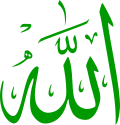

In Islam, the Arabic language is given more importance than any other language because the primary religious sources of Islam, the Quran and Hadith, are in Arabic,[1][2] which is referred to as Quranic Arabic.[3]
Arabic is considered the ideal theological language of Islam and holds a special role in education and worship. Many Muslims view the Quran as divine revelation — it is believed to be the direct word of Allah (God) as it was revealed to Muhammad in Arabic.[4] Almost all Muslims believe that the Quran in Arabic is an accurate copy of the original version received by Muhammad from Allah through the angelic messenger Gabriel during the ascension to heaven (Mi'raj).[5][6]
However, this belief is not universal among all Muslims and only emerged with the development of Islam over time.[7][8] Therefore, translations of the Quran into other languages are not considered the original Quran; rather, they are seen as interpretive texts that attempt to convey the message of the Quran.[9] Despite being invalid for religious practices, these translations are generally accepted by Islamic religious authorities as interpretive guides for non-Arabic speakers.[10][11]
In Quran
In the Quran, it is clearly mentioned that it was revealed in Arabic so that its initial audience, who were predominantly Arabic-speaking, could fully comprehend its meanings and messages.
Indeed, We have sent it down as an Arabic Qur'an so that you might understand.
— 12:2
Also similar messages are given in 26:195, 43:3 and 20:113. The Qur'an also mentions that if it had not been revealed in Arabic, the non-believers of Islam would have doubted the Qur'an and the Prophet.
And if We had made it a non-Arabic Qur'an, they would have said, 'Why are its verses not explained in detail [in our language]? Is it a foreign [recitation] and an Arab [messenger]?' Say, 'It is, for those who believe, a guidance and cure.
— 41:44
Language of Quran and Hadith
The Arabic language is considered a part of Islam's religion, and learning it is not just an educational goal but also an essential means for understanding and deep knowledge of Islamic sources. Classical scholars and intelligentsia recognized its importance, with Omar Ibn Al-Khattab stating it is essential for understanding the Quran. Ibn Al-Jawzi asserts that Arabic grammar and language are integral to Islamic sciences, providing a clear understanding of the Quran's meaning. Ibn Jinni argues weak Arabic knowledge leads to deviation from Islamic Sharia. Ibn Taymiya considers Arabic knowledge a religious obligatory must for understanding the Quran and Sunnah.[12]
Arabic linguistics has its roots in the Quran and pre-Islamic poetry, with the first reliable book of Arabic grammar "Sibawayh" appearing by the end of the second century of Hijra. Before the advent of Islam, Arabic tradition was mainly oral, with the writing tradition beginning with the Quran. This written tradition was inspired by the religious challenges of the new era, pen and book. Despite the shortcomings of the pre-Islamic Arabs in documenting their oral tradition, the Islamic written recovery of this oral tradition allows us to appreciate the linguistic supremacy of the Arabs before Islam. The Quran challenged the linguistic shrewdness of the first Muslim generations, as it was revealed in the language of the Arabs, allowing them to understand and know its meanings both in vocabulary and syntax. Narratives often show Muhammad giving an exegesis of verses or words that were not clear enough for their companions or had an allegorical meaning.[12]
Quran has significantly influenced the bond between Islam and the Arabic language, leading to the development of various Islamic sciences, particularly in Arabic literature and literature. Muslim scholars like Fazlur Rahman Malik claim that all non-secular sciences in Islam owe their origin to the Quran. The doctrine of 'inimitability' of the Quran is common across Muslim schools and has been a key factor in Arabic literature.[12]
John Penrice emphasizes the nature of the Quran's language calling it "miraculous" as a standard for Arabic literature. He believes that a competent knowledge of the Koran is essential for understanding Arabic literature, even without belief in its divine origin. He states, Quran contains transcendent excellencies and poetic ideas, with rich and appropriate language that transcends translation.[12]
During the early years of Islam, Arabic was crucial in its Quranic level. As Islam expanded, the dangers of misreading and misunderstanding the Quran's text increased. Ibn Khaldoun discussed the importance of Arabic in the Muslim world and the mixing of Arabic with non-Arabic languages due to foreign invasions. Quranic sciences emerged, leading to the establishment of tafsir-schools in Mecca, Medina, and Iraq. The emergence of a tafsir methodology in Islam aimed to protect the "divine word" from human language variability. The diachrony of Arabic language remained a significant factor in human interaction with the Quranic text.[12]
Abu Hamid Al-Ghazali explains how Islamic terms like salah, hajj, sawm, and zakat evolved from their original linguistic meanings. Islam added religious preconditions to these terms, including kinetic activities like kneeling and prostrating, and incorporating religious practices like circling the Kaba and standing on the Arafa mount.[12]
Use of the word "Allah"

Hamid Nadim Rafiabadi claimed the word "Allah" as untranslatable as a "good" or "God." It is distinct from all names and cannot be derived. According to Abdul Majid Daryabadi the English word "God" is a common German word to refer any superhuman figures from pagan mythologies who possess authority over both nature and humans, as an object of worship, but the word Allah is totally unique to it.[13]
Allah, originally al-ilah, is derived from alaha (we worshiped) or aliha (he was bewildered). Al-ilah means al-Matuh, the object of worship or the object of confusion for minds. The verb aliha signifies looking for safety, support, and sanctuary in order to survive, saving, rescuing, or delivering from evil. Adding the definite article "al" results in the word "Allah." According to Abdullah Ibn Abbas, Allah is the One Everyone takes as its god and worships, possessing the attributes of divinity and being worshiped. Alaha means to worship, it gives rise to the verbal noun ilaha.[13]
There is a disagreement on the etymological aspect of the Islamic Quranic word "Allah," including its origin, origin, and usage. Some scholars believe it originates from the term Ilahia in Chaldean and Syriac, which became Allah in Arabic later on. Others believe it is a Hebrew word, Eloha or Alaha (אלהא[14]), used by Jews and Christians alike. The original form of the word was LAHA, which later evolved into Gabriel, Michael, Ismael, and Israel. When Arabicized, the final Alif was left out and replaced with LAM, making the sound of Lam more prominent. In Hebrew, words like "Eli" and "Elah" are conspicuous, indicating that God is exalted, and the words "Eliyahu" and "Eliyahu" signify worship of the deity. The Arabicization of these words has led to a debate on its origin and meaning.[13]
Marmaduke Pickthall notes that since the word Allah is neither feminine nor plural and has only ever been used to refer to the unfathomable supreme being, there is no equivalent term for Allah in English. The word "God" was used in old English, Icelandic, Danish, Swedish, and German, but from a monotheistic viewpoint, it represents the supreme being, all-powerful, omniscient, eternal, infinite spirit, and creator and ruler of the universe, whom humans worship. The word can also be found with the small letter "g," which indicates a male who is considered to be immortal and endowed with supernatural abilities. It also refers to anything or anyone who has been the subject of extreme or unrestrained devotion; the old English word for this is godship. These characteristics of the term "god" or "God" are not appropriate for "Al-lah" because they are associated with the polytheistic, Trinitarian, or dualistic nature of the deity.[13]
The concept of Allah and related terms are discussed in Fakhruddin Razi's Tafsir, wherein it is argued that the word Allah is a proper noun rather than a derivative. La ilaha illallah, in his opinion, suggests the total unity of God and rejects identification with numerous other gods. Since Allah is a proper name that captures the essence of Allah uniquely, derivatives are not appropriate. His well-known statements shed important light on the idea of God's distinct essence.[13]
The term "Allah" is more appropriate than the term "God," which is frequently linked to aspects of polytheism, trinitarianism, and dualistic thinking. According to the Quran, there is only one God, and anyone who believes that Allah has partners will not be allowed to enter paradise and will not have any support. There is only one God, thus the Quran forbids disbelieving that Allah is the third of three gods. The pagan Arabs also referred to their gods as "Allah," allocating a portion of their altruistic duties to both Allah and their gods. According to Hamiduddin Farahi, the Arabic word "Al" (the) is used specifically for "Allah," and it is only used for Allah, the one who created the earth, the heavens, and all living things. This word has the same meaning among the Arabs.[13]
Rahman is described as a forgiving being who desires goodness and the betterment of all creatures in the Tafsir al-Jalalayn. On the other hand, Rahim is a common term but lexically specific, whereas Rahman is specific in meaning but common in literal sense. Al-Rahman is the universal kindness that Allah bestows on all beings, good and bad, believers and unbelievers alike. The limitless benefits of life are bestowed upon all people, and they provide them with sustenance in abundance. Ar-Rahim, on the other hand, speaks exclusively of the special mercy given to believers and submissive servants. Although Rahim is indeed occasionally used with this same the meaning of an endless kind of mercy, Rahman focused in the Quran meaning.[13]
The words Rahman and Rahim, which are generated from the root Rahmat, signify gentleness and affection. Rahman is the precursor to the Arabic verb, meaning the highest importance in divine mercy, whereas the latter makes use of the infinite supply of grace from the divine being. Both Rahman and Rahim are active participle nouns with distinct paradigms; Rahman represents the highest form of Arabic verb, while Rahim expresses how that grace manifests itself in and affects his creation.[13]
In Islamic practices
Arabic holds a central role in Islamic rituals, especially in the daily prayers (Salah), which are performed five times a day by Muslims worldwide. Salah is obligatory for practicing Muslims, and the recitation of Quranic verses in Arabic is a fundamental part of this practice. Regardless of a Muslim's native language, the prescribed prayers must be recited in Arabic, maintaining a direct connection to the language in which the Quran was revealed. The most frequently recited chapter during prayers is Surah Al-Fatiha, the opening chapter of the Quran. This practice ensures uniformity and a sense of unity among Muslims globally, regardless of linguistic and cultural differences.[15]
Beyond Salah, Arabic is also essential in other Islamic rituals. For instance, the call to prayer (Adhan) is always delivered in Arabic, starting with the declaration "Allahu Akbar" (God is Great). The Adhan serves as an invitation to prayer and is heard in communities around the world.[16] Arabic phrases are used in a variety of other rituals and religious acts, such as during the performance of Hajj, the Islamic pilgrimage to Mecca. Pilgrims recite prayers and phrases in Arabic, including the Talbiyah: "Labbayka Allahumma Labbayk" (Here I am, O Allah, here I am).[17]
Arabic also plays a key role in the recitation of Du'a (supplications), which, while not obligatory, are strongly encouraged in a Muslim's daily life. Many Muslims prefer to recite traditional Arabic Du'as that were said by Prophet Muhammad, although they can be made in any language.[18]
The significance of Arabic in Islamic rituals is not merely linguistic but deeply spiritual. Reciting Quranic verses in their original Arabic form is considered essential for preserving the divine message as revealed to Prophet Muhammad. This is why, for centuries, Muslims have learned Arabic to correctly recite the Quran and perform religious duties. The act of reciting the Qur'an with proper rules of pronunciation (Tajweed) in its Arabic form is seen as an act of worship itself. Many Muslims around the world, regardless of their mother tongue, strive to memorize the Qur'an, known as Hifz, entirely in Arabic.[19]
Despite the availability of numerous translations of the Quran, the Arabic text is regarded as the only authentic version, with translations considered interpretations. This view emphasizes that only the original Arabic captures the full depth, meaning, and beauty of the divine revelation, as intended. For this reason, Arabic serves as a medium not just for communication, but for maintaining a direct link between Muslims and the divine message of Islam, transcending national, linguistic, and cultural boundaries.[17] Ibn Taymiyyah said,
The Arabic language itself is from the Religion and knowing it is an obligatory duty because understanding the Book and the Sunnah is an obligation and they cannot be understood, except with the Arabic language. That without which an obligation cannot be completed is itself an obligation.
— Iqtida al-Sirat al-Mustaqim, (1/527, 2/207)[20]
Art and literature
For many centuries, Arabic served as the linguistic vehicle through which many of Islamic civilization's religious, cultural, and intellectual achievements were articulated and refined. Recitation of the Quran is an artistic tradition similar to that of opera singing, where a singer (known as a qāriʾ) is expected to have mastery of vocal skills.[21] Outside daily prayer, recitations of the Quran in Arabic play a large role in major rituals such as marriage or funerary rites.[22]
The Muslim world is known for a tradition of calligraphy, where handwritten copies of the Quran are revered or preserved as museum pieces.[23] The visual tradition of depicting Muhammad, in particular, is to represent his name in calligraphy rather than depict him visually as a human figure.
Nationalism and Islamization
Arabic's role in Islam has been a major contributing factor to nationalist projects, both within and without the Arab world. Arab nationalists have supported the development of Modern Standard Arabic as an official state language in the Arab world, often making a direct connection between the language and the Islamic faith.[24] Nationalist projects in individual Arab nations often seek to implement the local vernacular dialect as the official language, but are met with religious opposition for "separating the Arabs from their one divine language."[25][26]
Arabic script was first used to write texts in Arabic, most notably the Quran, the holy book of Islam. With the religion's spread, it came to be used as the primary script for many language families, leading to the addition of new letters and other symbols. Such languages still using it are: Persian (Farsi and Dari), Malay (Jawi), Cham (Akhar Srak),[27] Uyghur, Kurdish, Punjabi (Shahmukhi), Sindhi, Balti, Balochi, Pashto, Lurish, Urdu, Kashmiri, Rohingya, Somali, Mandinka, and Mooré, among others.[28] Until the 16th century, it was also used for some Spanish texts, and—prior to the script reform in 1928—it was the writing system of Turkish.[29]
Algeria
Modern Standard Arabic, as the Quran's language, has been widely used in Algeria due to its opposition to neocolonial language and religion. Algerian nationalists' enthusiasm for Islam and Arabic, and rejection of French-associated language and culture, has led to sociolinguistic chaos, with many Algerian speakers lacking proper command of either language.[30]
Egypt
The Islamization of Egypt occurred after the 7th century Arab conquest of Egypt, in which the Islamic Rashidun Caliphate seized control of Egypt from the Christian Byzantine Empire. Egypt and other conquered territories in the Middle East underwent a large scale gradual conversion from Christianity to Islam, accompanied by jizya for those who refused to convert.[31] Islam became the dominant faith by the 10th to 12th centuries, and Arabic replaced Coptic as the vernacular language and Greek as the official language.[32]
Iran
The Islamization of Iran was the spread of Islam in formerly Sassanid Iran as a result of the Muslim conquest of the empire in 633–654. It was a long process by which Islam, though initially rejected, eventually spread among the population on the Iranian Plateau. Iranian peoples have maintained certain pre-Islamic traditions, including their language and culture, and adapted them with Arabian Islamic codes, specially using Arabic script in Farsi language. These two customs and traditions merged as the "Iranian Islamic" identity.[33]
Pakistan


Problems playing this file? See media help.
In Pakistan, where Arabic is not a native language of the country's ethnic groups, Arabic has still held a role in the state's religious nationalist project.[34] Arabic is mentioned in the constitution of Pakistan. It declares in article 31 No. 2 that "The State shall endeavour, as respects the Muslims of Pakistan (a) to make the teaching of the Holy Quran and Islamiat compulsory, to encourage and facilitate the learning of Arabic language ..."[35]
The Senate of Pakistan passed the Compulsory Teaching of the Arabic Language Bill on February 1, 2021, making Arabic teaching compulsory in Islamabad's primary and secondary schools.[36]
After the creation of Pakistan in 1947 during East Pakistani language movement, many advocated to Muhammad Ali Jinnah[37] making Arabic the state language of Pakistan as a Muslim nationalist country, which was later supported and reiterated by many, but the proposal ultimately did not gain popular support and popularity.[38][39][40] These proposals to make Arabic the state language failed to gain substantial support in any part of Pakistan.[41] However, as this demand is linked to the question of the development of Islamic culture, it indirectly reinforced the demand for the introduction of Arabic script in the state language Urdu and Bengali (Dobhashi) in some quarters.[41]
Turkey
Ottoman Turkish (لِسانِ عُثمانى Lisân-ı Osmânî, Turkish pronunciation: [liˈsaːnɯ osˈmaːniː]; Osmanlı Türkçesi) was the standardized register of the Turkish language in the Islamic Ottoman Empire (14th to 20th centuries CE). It borrowed extensively, in all aspects, from Arabic and Persian. It was written in the Ottoman Turkish alphabet. During the peak of Ottoman power (c. 16th century CE), words of foreign origin mostly from Arabic and Persian, heavily outnumbered native Turkish words in Turkish literature in the Ottoman Empire,[42] with Arabic and Persian vocabulary accounting for up to 88% of the Ottoman vocabulary in some texts.[43]
Malta

The strongest legacy of Islam in Malta is the Maltese language,[44] which is very close to Tunisian Arabic and most place names (other than the names Malta and Gozo[45]) are Arabic, as are most surnames, e.g. Borg, Cassar, Chetcuti, Farrugia, Fenech, Micallef, Mifsud and Zammit.[46][47][48] It has been argued that this survival of the Maltese language, as opposed to the extinction of Siculo-Arabic in Sicily, is probably due to the eventual large-scale conversions to Christianity of the proportionally large Maltese Muslim population.[49] The pioneering Maltese linguists Canon Giovanni Pietro Francesco Agius de Soldanis and Mikiel Anton Vassalli both mistakenly hypothesised that Maltese originated from the Punic language. Later scholars like John L. Hayes, considered it to be descended from a North African dialect of Colloquial Arabic which was introduced to Malta when the Aghlabids captured it in the 9th century.[50] However, genetic studies and historical evidence have established that Malta was depopulated after that raid, and that the island was subsequently repopulated by settlers from Sicily and Calabria who spoke Siculo-Arabic, which had developed as a Maghrebi Arabic dialect in the Emirate of Sicily between 831 and 1091. [51].[52].[53] As a result of the Norman invasion of Malta and the subsequent re-Christianisation of the islands, Maltese evolved independently of Classical Arabic in a gradual process of Latinisation.[54][55] It is therefore exceptional as a variety of historical Arabic that has no diglossic relationship with Classical or Modern Standard Arabic.[56] Maltese is thus classified separately from the 30 varieties constituting the modern Arabic macrolanguage. Maltese is also distinguished from Arabic and other Semitic languages since its morphology has been deeply influenced by Romance languages, namely Italian and Sicilian.[57]
According to the Arab chronicler and geographer al-Ḥimyarī (author of Kitab al-Rawḍ al-Miṭar), following the Muslim attack and conquest, Malta was practically uninhabited until it was colonised by Muslims from Sicily in 1048–1049, or possibly several decades earlier.[58] As recognised by the acclaimed Maltese historian Godfrey Wettinger, the Arab conquest broke any continuity with previous population of the island. This is also consistent with Joseph Brincat’s linguistic finding of no further sub-stratas beyond Arabic in the Maltese language, a very rare occurrence which may only be explained by a drastic lapse between one period and the following.[59]
The original Arabic base comprises around one-third of the Maltese vocabulary, especially words that denote basic ideas and the function words,[60] but about half of the vocabulary is derived from standard Italian and Sicilian;[61] and English words make up 6–20% of the vocabulary.[62] A 2016 study shows that, in terms of basic everyday language, speakers of Maltese are able to understand less than a third of what is said to them in Tunisian Arabic and Libyan Arabic,[63] which are Maghrebi Arabic dialects related to Siculo-Arabic,[64] whereas speakers of Tunisian Arabic and Libyan Arabic are able to understand about 40% of what is said to them in Maltese.[65] This reported level of asymmetric intelligibility is considerably lower than the mutual intelligibility found between mainstream varieties of Arabic.[66]
Maltese has always been written in the Latin script, the earliest surviving example dating from the late Middle Ages.[67] It is the only standardised Semitic language written exclusively in the Latin script.[68]
References
- ↑ "The Importance of the Arabic Language in Islam". 2021-11-07. Retrieved 2024-09-06.
- ↑ "Why the Arabic Language Is So Important in the Muslim World". The Superprof Blog - UK. 2022-01-27. Retrieved 2024-09-06.
- ↑ Mohamed, Eman (2017-02-13). "Quranic Arabic Versus Modern Standard Arabic". Arab Academy. Retrieved 2024-09-06.
- ↑ "The Quran is the Speech of Allah". Islamweb. Retrieved 2024-09-06.
- ↑ "How Do We Know the Quran is Unchanged? - IslamiCity". www.islamicity.org. Retrieved 2024-09-06.
- ↑ "Jibreel (AS) and Prophet Muhammad ﷺ". Quran Academy. Retrieved 2024-09-06.
- ↑ Brown, Daniel W. (2009). A New Introduction to Islam. John Wiley & Sons. pp. 43–44. ISBN 978-1-4051-5807-7.
- ↑ Rippin, Andrew (2005). Muslims: Their Religious Beliefs and Practices. Routledge. pp. 89–91. ISBN 978-0-415-34888-1.
- ↑ Rahman, Fazlur (2009). Major Themes of the Quran. University of Chicago Press. pp. 34–36. ISBN 978-0-226-70286-5.
- ↑ "Reciting the Qur'an in other languages during Prayer - Fiqh". IslamOnline. 2022-10-24. Retrieved 2024-09-11.
- ↑ "Translation of the Quran - 7 conditions for translation". quranteacheracademy.com. 2023-08-12. Retrieved 2024-09-11.
- 1 2 3 4 5 6 Ellethy, Yaser (20 November 2014). Islam, Context, Pluralism and Democracy: Classical and Modern Interpretations. Routledge. pp. 23–28. ISBN 978-1-317-62746-3. Retrieved 22 April 2024.
- 1 2 3 4 5 6 7 8 Rafiabadi, Hamid Naseem (2003). World Religions and Islam: A Critical Study. Sarup & Sons. pp. 180–220. ISBN 978-81-7625-414-4. Retrieved 1 May 2024.
- ↑ Jastrow's "Dictionary of Targums, Talmuds, and Midrash" (Luzac & Co. 1903), vol. I, pp. 66-7.
- ↑ Denny, Frederick M. (1994). Islam and the Muslim Community. Waveland Press. ISBN 978-1-57766-007-1.
- ↑ Esposito, John L. (1998). Islam: The Straight Path. Oxford University Press. ISBN 978-0-19-511234-4.
- 1 2 Nasr, Seyyed Hossein (2002). The Heart of Islam: Enduring Values for Humanity. HarperOne. ISBN 978-0-06-073064-2.
- ↑ Denny, Frederick M. (1987). Islam and the Muslim Community. Waveland Press. ISBN 978-0-06-061875-9.
- ↑ Graham, William A. (1989). Beyond the Written Word: Oral Aspects of Scripture in the History of Religion. Cambridge University Press.
- ↑ مهدي, أيمن (2016). "أثر اللغة العربية في فهم الحديث النبوي الشريف | مجلد 1 | صفحة 6 | المبحث الثاني: حكم تعلم اللغة العر" (in Arabic). ketabonline.com. Retrieved 27 March 2026.
- ↑ Ernst 2013, p. 3: "Recitation of the Arabic text of the Qur'an is a demanding art; at the highest level, virtuoso Qur'an reciters demonstrate vocal skills comparable to those of an opera singer"
- ↑ Ernst 2013, p. 59: "Reciting the Qur'an plays a leading role in many important aspects of Islamic religious life. Just in terms of rites of passage, it is important to note the crucial role of Qur'an recitation throughout life, beginning with birth rituals and extending to circumcision, marriage, and funerals."
- ↑ Ernst 2013, p. 3: "Handwritten copies of the Qur'an, often in lavish and lovingly created calligraphic styles, represent one of the most revered forms of Islamic art."
- ↑ Chism 2009, p. 625: "The many lands of Islam were bound together across huge cultural and linguistic differences through the Arabic language of the Qur'an and through shared religious practice"
- ↑ Mabry 2015, p. 69: "To separate Arab peoples by their many demotic languages would mean to separate the Arabs from their one divine language"
- ↑ Suleiman 2003, p. 10: "Since it is not possible to achieve this separation without causing a rupture with Islam, the basis of the religious identity of the majority of Arabic-speakers, any attempt to replace the standard by the colloquial as the marker of a particular territorial nationalism is invariably met with religious opposition"
- ↑ Cham romanization table background. Library of Congress
- ↑ Mahinnaz Mirdehghan. 2010. Persian, Urdu, and Pashto: A comparative orthographic analysis. Writing Systems Research Vol. 2, No. 1, 9–23.
- ↑ "Exposición Virtual. Biblioteca Nacional de España". Bne.es. Archived from the original on 2012-02-18. Retrieved 2012-04-06.
- ↑ al-Alwani, Taha J.; sadeq, A. H. M.; Osman, Fathi; Ellhyeb, Sahh Elpin El2kin; Farhan, Ishaq; Yusuf, Sakhudeen. American Journal of Islamic Social Sciences 69:2. International Institute of Islamic Thought (IIIT). p. 286. Retrieved 22 April 2024.
{{cite book}}: CS1 maint: numeric names: authors list (link) - ↑ Conversion, Exemption, and Manipulation: Social Benefits and Conversion to Islam in Late Antiquity and the Middle Ages: Forcing taxes on those who refuse to convert (PDF),
ʿUmar is depicted as having ordered that 'the poll-tax should be taken from all men who would not become Muslims'
- ↑ Clive Holes, Modern Arabic: structures, functions, and varieties, Georgetown University Press, 2004, ISBN 978-1-58901-022-2, M1 Google Print, p. 29.
- ↑ Iran in History Archived 2007-04-29 at the Wayback Machine by Bernard Lewis.
- ↑ Rahman 2000, p. 437: "For the state, which teaches it compulsorily, it is part of indoctrination – a symbolic reinforcement of the Muslim identity of Pakistanis with a view to mobilizing their religious sentiment"
- ↑ Constitution of Pakistan: Constitution of Pakistan, 1973 - Article: 31 Islamic way of life Archived 2018-08-26 at the Wayback Machine, 1973, retrieved 28 July 2018
- ↑ Jamal, Sana (2 February 2021). "Pakistan parliament approves compulsory Arabic classes in Islamabad schools". Gulf News. Retrieved 22 April 2024.
- ↑ "Arabic as official language". Arab News. 1 February 2013. Retrieved 9 April 2024.
- ↑ হোসেন, সেলিনা; বিশ্বাস, সুকুমার; চৌধুরী, শফিকুর রহমান, eds. (21 February 1986). একুশের স্মারকগ্রন্থ' ৮৬ (in Bengali). Bangladesh: Bangla Academy. pp. 52–73. Retrieved 27 November 2022.
- ↑ Zein, Subhan; Coady, Maria R. (22 September 2021). Early Language Learning Policy in the 21st Century: An International Perspective. Springer Nature. p. 136. ISBN 978-3-030-76251-3. Retrieved 27 November 2022.
- ↑ Chaube, Shibani Kinkar (26 October 2016). The Idea of Nation and Its Future in India. Taylor & Francis. p. 122. ISBN 978-1-315-41432-4. Retrieved 27 November 2022.
- 1 2 Umar, Badruddin (1970). "অষ্টম পরিচ্ছেদের চতুর্থ অনুচ্ছেদ". পূর্ব বাংলার ভাষা আন্দোলন ও তৎকালীন রাজনীতি (in Bengali). Anandhara Publications. pp. 282–284.
৪। আরবীকে রাষ্ট্রভাষা করার প্রস্তাবঃ বাংলা ভাষায় আরবী হরফ প্রচলনের ষড়যন্ত্রের পাশাপাশি আরবীকে পাকিস্তানের রাষ্ট্রভাষা করার জন্যে দেশের বিভিন্ন স্তরের কিছু ব্যক্তি নিজেদের অভিমত ব্যক্ত করেন। এঁদের মধ্যে ডক্টর মুহম্মদ শহীদুল্লাহর ভূমিকাই সব থেকে উল্লেখযোগ্য এবং ভাষা সম্পর্কে তাঁর অন্যান্ত বক্তব্যের সাথে অসঙ্গতিপূর্ণ। তিনি উর্দুকে রাষ্ট্রভাষা রূপে গ্রহণ করার এবং বাংলা ভাষায় আরবী হরফ প্রবর্তনের ঘোর বিরোধিতা সত্ত্বেও ধর্মীয় কারণে আরবীর প্রতি একটা বিশেষ দুর্বলতা এর পূর্বেও ব্যক্ত করেছেন। কয়েক বছর পূর্বে তিনি এ প্রসঙ্গে বলেন, 'সেদিন পাকিস্তান রাষ্ট্রের জন্ম সার্থক হইবে, যেদিন আরবী সমগ্র পাকিস্তানের রাষ্ট্রভাষা রূপে গৃহীত হইবে। পূর্ব পাকিস্তান আরবী সংঘ নামে একটি প্রতিষ্ঠানের কার্যকারী সমিতি ডক্টর শহীদুল্লাহর সভাপতিত্বে ১৯৪৯ সালের ডিসেম্বের মাসে পাকিস্তান গণ পরিষদে পেশ করার জন্য একটি খসড়া স্মারকলিপি অনুমোদন করেন। তাতে আরবীকে পাকিস্তানের রাষ্ট্রভাষা করার সুপারিশ এবং শহরের বিভিন্ন কেন্দ্র ও মফঃস্বলে 'দরসে কোরানে'র ব্যবস্থা করার জন্যে সরকারকে অনুরোধ জানানো হয়। এর পর ১৮ই জানুয়ারি, ১৯৫০, রাজশাহী কলেজের কিছু সংখ্যক ছাত্র আরবীকে পাকিস্তানের রাষ্ট্রভাষা করার দাবীতে কলেজ কমনরুমে একটি সভা আহ্বান করেন। সেখানে প্রাদেশিকতা দূর করার উপায় হিসাবে আরবীকে রাষ্ট্রভাষা করার প্রয়োজনীয়তার উল্লেখ করা হয়। আরবী ভাষাকে পাকিস্তানের রাষ্ট্রভাষা করার জন্যে আইন মোতাবেক আন্দোলন চালানো হবে বলে সেই সভায় একটি প্রস্তাব গৃহীত হয়। ৩ স্টেট ব্যাঙ্কের গভর্নর জাহিদ হোসেনও আরবীকে রাষ্ট্রভাষা করার প্রস্তাব করেন এবং তাঁর এই প্রস্তাব সিন্ধু আইন পরিষদের সদস্ত এবং সিন্ধু আরবী বিশ্ববিদ্যালয়ের ভাইস-চ্যান্সেলর সৈয়দ আকবর শাহ কর্তৃক সমর্থিত হয়। এই প্রসঙ্গে এক বিবৃতিতে তিনি বলেন যে আরবী ভাষা প্রবর্তন করলে মুসলিম জাহানের সাথে পাকিস্তানের সম্পর্ক আরও ঘনিষ্ঠ হবে এবং তার ফল স্বরূপ রাজনৈতিক দিক দিচ্ছে এ দেশ লাভবান হবে। এর পর ১৯৫১ সালের ১ই ফেব্রুয়ারি করাচীতে বিশ্ব মুসলিম সম্মেলনের প্রকাশ্য অধিবেশনে ইসমাইলী সম্প্রদায়ের নেতা আগা খান বলেন যে আরবীকে পাকিস্তানের রাষ্ট্রভাষা করা হলে আরব জাহান, উত্তর আফ্রিকা এবং ইন্দো নেশিয়ার মুসলমানদের মধ্যে সাধারণ যোগাযোগ স্থাপিত হবে। এ প্রসঙ্গে তিনি আরও বলেন, আমি খেয়ালের বশে কোনো কিছু বলিতেছি না। আমি যাহা বলিতেছি তাহা জনসাধারণের এক বিরাট অংশের নিকট অপ্রিয়। কিন্তু তবুও দুনিয়ার মুসলমানদের সম্মুখে আমার মতামত প্রকাশ না করিলে আমার কর্তব্য অসমাপ্ত থাকিবে এবং এছলামের প্রতি বিশ্বাসঘাতকতা করা হইবে। আরবীকে রাষ্ট্রভাষা করার এই সব প্রস্তাব অবশ্য পাকিস্তানের কোনো অংশেই তেমন কোনো সমর্থন লাভ করে নাই। তবে এই দাবী ইসলামী সংস্কৃতির বিকাশের প্রশ্নের সাথে জড়িত থাকায় তা পরোক্ষভাবে রাষ্ট্রভাষা উর্দু এবং বাংলা ভাষায় আরবী হর। প্রবর্তনের দাবীকে কতকগুলি মহলে জোরদার করে। বিভিন্ন মহলে মারবীকে রাষ্ট্রভাষা করার যে প্রস্তাব উত্থাপিত হয় তার বিরোধিতা করে পাকিস্তান বৌদ্ধ লীগের সেক্রেটারী রবীন্দ্রনাথ বর্মী ১০ই ফেব্রুয়ারি, ১৯৫১, এক বিবৃতি দেন। কিন্তু এক্ষেত্রে আরবীর ক্ষান্ত না হয়ে তিনি উর্দুর সমর্থনে ওকালতিও করেন: ৩০২/৪০৫ পাকিস্তান মোছলেম লীগ কাউন্সিল সম্প্রতি এক প্রস্তাবে মারবীকে পাকিস্তানের রাষ্ট্রভাষা রূপে গ্রহণ করিবার জন্য সোপারেণ করিয়াছেন। পাকিস্তানের স্রষ্টা মরহুম কায়েদে আজম এই ঢাকা শহরে সুস্পষ্টভাবে ঘোষণা করিয়াছিলেন যে, উর্দুই পাকিস্তানের রাষ্ট্রভাষা হইবে। কারণ ইংরেজী ভাষার পর উপ-মহাদেশের অধিকাংশ লোকে উর্দু ভাষা সহজে বুঝিতে পারে। কিন্তু পাকিস্তানের কোথাও আরবী ভাষায় কথাবার্তা বলা হয় না। পাকিস্তানের সংবাদপত্র এবং সামরিক পত্রাদিও উর্দুতে প্রকাশিত হয়। আমাদের মনে হয় আরবীর পরিবর্তে উর্দুই রাষ্ট্রভাষা হওয়া উচিত। সংখ্যালঘু বৌদ্ধ সম্প্রদায়ের প্রতিনিধির পক্ষে উর্দুকে রাষ্ট্রভাষা করার ওকালতি নিতান্তই অস্বাভাবিক। একদিকে রাষ্ট্রদ্রোহী আখ্যা লাভের ভয়ে বাংলাকে রাষ্ট্রভাষা হিসাবে দাবী করার অক্ষমতা এবং অন্য আরবীর মতো একটি সম্পূর্ণ বিদেশী ভাষাকে রাষ্ট্রভাষা রূপে গ্রহণ করার বিপদ এ দুইয়ের ফলেই খুব সম্ভবতঃ রবীন্দ্রনাথ বর্মীর উচু সমর্থন। কিন্তু কারণ যাই যে সংখ্যালঘু সম্প্রদায়ের একজন প্রতিনিধির পক্ষে এ জাতীয় বক্তব্য ৩০৩ / ৪০৫ সুবিধাবাদ ও মেরুদণ্ডহীনতার পরিচায়ক সে বিষয়ে সন্দেহের বিন্দুমাত্র কারণ নেই।
- ↑ Eid, Mushira (2006). Encyclopedia of Arabic Language and Linguistics, Volume 4. Brill. ISBN 978-90-04-14976-2.
- ↑ Bertold Spuler [de]. Persian Historiography & Geography Pustaka Nasional Pte Ltd ISBN 9971-77-488-7 p 69
- ↑ Christian W. Troll; C.T.R. Hewer (12 Sep 2012). "Journeying toward God". Christian Lives Given to the Study of Islam. Fordham Univ Press. p. 259. ISBN 978-0-8232-4319-8.
- ↑ Neil Wilson; Carolyn Joy Bain (2010). "History". Malta and Gozo (illustrated ed.). Lonely Planet. p. 18. ISBN 9781741045086.
Apart from the names Malta and Gozo, which probably have Latin roots, there is not a single place name in the Maltese Islands that can be proved to predate the Arab occupation.
- ↑ Aquilina, J. (1964). "A Comparative Study in Lexical Material relating to Nicknames and Surnames" (PDF). Journal of Maltese Studies. 2. Melita Historica: 154–158.
- ↑ Kristina Chetcuti (9 February 2014). "Why most Maltese share the same 100 surnames". Times of Malta. Retrieved 12 May 2014.
- ↑ Juliet Rix (1 Apr 2013). "1 (History)". Malta (2, illustrated ed.). Bradt Travel Guides. p. 9. ISBN 9781841624525.
- ↑ Stefan Goodwin (1 Jan 2002). "2 (Islam and Realignments)". Malta, Mediterranean Bridge (illustrated ed.). Greenwood Publishing Group. p. 31. ISBN 9780897898201.
The likelihood that many Muslims in Malta eventually converted to Christianity rather than leave seems indicated by parallels in Sicily as well as by the fact that there is linguistic evidence suggesting that "there was a time when the church of Malta was fed by Christian Arabs." Luttrell [Anthony T. Luttrell] is also on record with the argument that "the persistence of the spoken Arabo-Berber language" in Malta can probably best be explained by eventual large-scale conversions of Maltese Muslims to Christianity. Even when Islam had completely been erased from the Maltese landscape, Arabic remained, especially as represented by colloquial dialects of the language spoken in Libya, Tunisia, and in medieval Sicily. In the words of Aquilina, "The Arabs are linguistically the most important people that ever managed the affairs of the country…for there is no doubt that, allowing for a number of peculiarities and erratic developments, Maltese is structurally an Arabic dialect."
- ↑ Hayes, John (2001). "THE INTEGRATION OF ROMANCE VOCABULARY IN MALTESE". Romance Philology. 54 (2): 393. Archived from the original on 2024-11-22. Retrieved 2024-11-22.
- ↑ Genetic Origin of Contemporary Maltese People. 5 August 2007. Archived from the original on 8 July 2018. Retrieved 23 December 2011.
Together with colleagues from other institutions across the Mediterranean and in collaboration with the group led by David Goldstein at the University College, London, we have shown that the contemporary males of Malta most likely originated from Southern Italy, including Sicily and up to Calabria. There is a minuscule amount of input from the Eastern Mediterranean with genetic affinity to Christian Lebanon....We documented clustering of the Maltese markers with those of Sicilians and Calabrians. The study is published in the Annals of Human Genetics by C. Capelli, N. Redhead, N. Novelletto, L. Terrenato, P. Malaspina, Z. Poulli, G. Lefranc, A. Megarbane, V. Delague, V. Romano, F. Cali, V.F. Pascali, M. Fellous, A.E. Felice, and D.B. Goldstein; "Population Structure in the Mediterranean Basin; A Y Chromosome Perspective", AHG, 69, 1–20, 2005..
- ↑ Genetic Origin of Contemporary Maltese People. 5 August 2007. Archived from the original on 8 July 2018. Retrieved 23 December 2011.
Repopulation is likely to have occurred by a clan or clans (possibly of Arab or Arab-like speaking people) from neighbouring Sicily and Calabria. Possibly, they could have mixed with minute numbers of residual inhabitants, with a constant input of immigrants from neighbouring countries and later, even from afar. There seems to be little input from North Africa.
- ↑ So who are the 'real' Maltese. 14 September 2014. Archived from the original on 12 March 2016. Retrieved 11 March 2016.
There's a gap between 800 and 1200 where there is no record of civilisation. It doesn't mean the place was completely uninhabited. There may have been a few people living here and there, but not much……..The Arab influence on the Maltese language is not a result of Arab rule in Malta, Prof. Felice said. The influence is probably indirect, since the Arabs raided the island and left no-one behind, except for a few people. There are no records of civilisation of any kind at the time. The kind of Arabic used in the Maltese language is most likely derived from the language spoken by those that repopulated the island from Sicily in the early second millennium; it is known as Siculo-Arab. The Maltese are mostly descendants of these people.
- ↑ Albert J. Borg; Marie Azzopardi-Alexander (1997). Maltese. Routledge. p. xiii. ISBN 978-0-415-02243-9.
In fact, Maltese displays some areal traits typical of Maghrebine Arabic, although over the past 800 years of independent evolution it has drifted apart from Tunisian and Libyan Arabic
- ↑ Brincat (2005): "Originally Maltese was an Arabic dialect, but it was immediately exposed to Latinisation because the Normans conquered the islands in 1090, while Christianisation, which was complete by 1250, cut off the dialect from contact with Classical Arabic. Consequently Maltese developed on its own, slowly but steadily absorbing new words from Sicilian and Italian according to the needs of the developing community."
- ↑ Hoberman, Robert D. (2007). "Chapter 13: Maltese Morphology". In Kaye, Alan S. (ed.). Morphologies of Asia and Africa. Vol. 1. Winona Lake, Indiana: Eisenbrown. p. 258. ISBN 9781575061092. Archived from the original on 2017-09-30.
Maltese is the chief exception: Classical or Standard Arabic is irrelevant in the Maltese linguistic community and there is no diglossia.
- ↑ Hoberman, Robert D. (2007). "Chapter 13: Maltese Morphology". In Kaye, Alan S. (ed.). Morphologies of Asia and Africa. Winona Lake, Indiana: Eisenbrown. pp. 257–258. ISBN 9781575061092. Archived from the original on 2017-09-30.
yet it is in its morphology that Maltese also shows the most elaborate and deeply embedded influence from the Romance languages, Sicilian and Italian, with which it has long been in intimate contact.... As a result Maltese is unique and different from Arabic and other Semitic languages.
- ↑ Travel Malta. The Arab period and the Middle Ages: MobileReference. ISBN 978-1-61198-279-4.
- ↑ Godfrey Wettinger,Malta in the High Middle Ages, Speech at the Ambassadors’ Hall, Auberge de Castille, on 7 December 2010
- ↑ Brincat (2005): "An analysis of the etymology of the 41,000 words in Aquilina's Maltese-English Dictionary shows that 32.41% are of Arabic origin, 52.46% are from Sicilian and Italian, and 6.12% are from English. Although nowadays we know that all languages are mixed to varying degrees, this is quite an unusual formula. However, the words derived from Arabic are more frequent because they denote the basic ideas and include the function words."
- ↑ Brincat (2005).
- ↑ "Languages across Europe – Maltese, Malti". BBC. Archived from the original on 13 September 2017. Retrieved 12 January 2017.
- ↑ "Mutual Intelligibility of Spoken Maltese, Libyan Arabic and Tunisian Arabic Functionally Tested: A Pilot Study". p. 1. Archived from the original on 11 October 2017. Retrieved 23 September 2017.
To summarise our findings, we might observe that when it comes to the most basic everyday language, as reflected in our data sets, speakers of Maltese are able to understand less than a third of what is being said to them in either Tunisian or Benghazi Libyan Arabic.
- ↑ Borg, Albert J.; Azzopardi-Alexander, Marie (1997). Maltese. Routledge. ISBN 0-415-02243-6.
- ↑ "Mutual Intelligibility of Spoken Maltese, Libyan Arabic and Tunisian Arabic Functionally Tested: A Pilot Study". p. 1. Archived from the original on 11 October 2017. Retrieved 23 September 2017.
Speakers of Tunisian and Libyan Arabic are able to understand about 40% of what is said to them in Maltese.
- ↑ "Mutual Intelligibility of Spoken Maltese, Libyan Arabic and Tunisian Arabic Functionally Tested: A Pilot Study". p. 1. Archived from the original on 11 October 2017. Retrieved 23 September 2017.
In comparison, speakers of Libyan Arabic and speakers of Tunisian Arabic understand about two-thirds of what is being said to them.
- ↑ The Cantilena. 2013-10-19. Archived from the original on 2015-12-08.
- ↑ Il-Kunsill Nazzjonali tal-Ilsien Malti. Archived from the original on 2014-01-06.
Fundamentally, Maltese is a Semitic tongue, the same as Arabic, Aramaic, Hebrew, Phoenician, Carthaginian and Ethiopian. However, unlike other Semitic languages, Maltese is written in the Latin alphabet, but with the addition of special characters to accommodate certain Semitic sounds. Nowadays, however, there is much in the Maltese language today that is not Semitic, due to the immeasurable Romantic influence from our succession of (Southern) European rulers through the ages.
Sources
- Brincat, Joseph M. (2005). "Maltese – an unusual formula". MED Magazine (27). Archived from the original on 5 September 2005. Retrieved 22 February 2008.
- Chism, Christine (2009). "Arabic in the medieval world". Publications of the Modern Language Association of America. 124: 624–631. doi:10.1632/pmla.2009.124.2.624.
- Ernst, Carl W. (2013). How to Read the Qur'an: A New Guide, with Select Translations (بالإنجليزية). The University of North Carolina Press. ISBN 978-0-8078-3516-6. OCLC 770009460.
- Mabry, Tristan James (2015). Nationalism, Language, and Muslim Exceptionalism. University of Pennsylvania Press. doi:10.9783/9780812291018. ISBN 978-0-8122-9101-8.
- Rahman, Tariq (2000). "The teaching of Arabic to the Muslims of South Asia". Islamic Studies. 39 (3): 399–443.
- Suleiman, Yasir (2003). The Arabic Language and National Identity: A Study in Ideology. Edinburgh University Press. ISBN 978-1-4744-7293-7.
Islam topics | |||||||||||||
|---|---|---|---|---|---|---|---|---|---|---|---|---|---|
| |||||||||||||
| |||||||||||||
| |||||||||||||
| |||||||||||||


Arabic language | |||||||||||||||||||||||||||||||||||||
|---|---|---|---|---|---|---|---|---|---|---|---|---|---|---|---|---|---|---|---|---|---|---|---|---|---|---|---|---|---|---|---|---|---|---|---|---|---|
| Overviews | |||||||||||||||||||||||||||||||||||||
| Scripts | |||||||||||||||||||||||||||||||||||||
| Letters | |||||||||||||||||||||||||||||||||||||
| Varieties |
| ||||||||||||||||||||||||||||||||||||
| Academic | |||||||||||||||||||||||||||||||||||||
| Linguistics | |||||||||||||||||||||||||||||||||||||
| Calligraphy · Script | |||||||||||||||||||||||||||||||||||||
| Technical |
| ||||||||||||||||||||||||||||||||||||
| Other | |||||||||||||||||||||||||||||||||||||
| |||||||||||||||||||||||||||||||||||||