ENSIKLOPEDIA
Portal:Politics
 | Portal maintenance status: (June 2018)
|
| Main | Topics and categories | Tasks and projects |
The Politics portal
.jpg)
Politics is the activity of settling affairs in an organized society. Politics is usually concerned with resolving issues within a society via a government. Politicians are individuals engaged in the activity of politics. The branch of social science that studies politics and government is referred to as political science.
A variety of methods are deployed in politics, which include promoting one's own political views among people, negotiation with other political subjects, making laws, and exercising internal and external force, including warfare against adversaries. Politics is exercised on a wide range of social levels, from clans and tribes of traditional societies, through modern local governments, companies and institutions up to sovereign states, to the international level.
In modern states, people often form political parties to represent their ideas. Members of a party often agree to take the same position on many issues and agree to support the same changes to law and the same leaders. An election is usually a competition between different parties.
A political system is a framework which defines acceptable political methods within a society. The history of political thought can be traced back to early antiquity, with seminal works such as Plato's Republic, Aristotle's Politics, Confucius's political manuscripts and Chanakya's Arthashastra.
Politics may be used positively in the context of a "political solution" which is compromising and non-violent, or descriptively as "the art or science of government", but the word often also carries a negative connotation. (Full article...)
Selected article

The FairTax is a proposed change to the tax laws of the United States that would replace the Internal Revenue Service (IRS) and all federal income taxes (including corporate taxes and capital gains taxes), as well as payroll taxes (including Social Security and Medicare taxes), gift taxes, and estate taxes with a national retail sales tax. Its enacting legislation, the Fair Tax Act, is pending in the United States Congress. The tax would be levied once at the point of purchase on all new goods and services. The proposal also calls for a monthly payment to all households of citizens and legal resident aliens (based on family size) as an advance rebate of tax on purchases up to the poverty level. The sales tax rate, as defined in the legislation, is 23% of net prices which includes the tax (23¢ out of every $1 spent—calculated like income taxes), which is comparable to a 30% traditional sales tax (23¢ on top of every 77¢ spent). With the rebate taken into consideration, the effective tax rate would be progressive on consumption and could result in a federal tax burden of zero or less. However, opponents of the tax argue that while progressive on consumption, the tax would be regressive on income, and would accordingly decrease the tax burden on high income earners and increase the tax burden on the middle class.
Featured picture
_-_Restoration.jpg)
| Credit: Photograph credit: Eivind Enger; restored by Adam Cuerden |
Gina Krog (20 June 1847 – 14 April 1916) was a Norwegian suffragist, teacher, liberal politician, writer and editor. She played a central role in the Norwegian women's movement from the 1880s until her death, notably as a leading campaigner for women's right to vote. In 1884, Krog co-founded the Norwegian Association for Women's Rights with liberal MP Hagbart Berner. Over the next two decades, Krog co-founded the Women's Voting Association, the National Association for Women's Suffrage, and the Norwegian National Women's Council, spearheading the presentation of women's suffrage proposals to the Storting (the Norwegian parliament). She was an early member of the Liberal Party and served as a deputy member of its national board.
 Featured lists - load new batch

 Image 1
There are 120 counties in the U.S. Commonwealth of Kentucky. Despite ranking 37th in size by area, Kentucky has 120 counties, fourth among states (including Virginia's independent cities). The original motivation for having so many counties was to ensure that residents in the days of poor roads and horseback travel could make a round trip from their home to the county seat in a single day, as well as being able to travel from one county seat to the next in the same fashion. Later, however, politics began to play a part, with citizens who disagreed with their county government petitioning the state to create a new county. Today, 22 of the 120 counties have fewer than 10,000 residents, and half have fewer than 20,000. The 20 largest counties by population all have populations of 50,000 or higher, and just 8 of the 120 have a population of 100,000 or higher. The average county population, based on the estimated 2025 state population of 4.606 million, was 38,391.
Following concerns of too many counties, the 1891 Kentucky Constitution placed stricter limits on county creation, stipulating that a new county:- must have a land area of at least 400 square miles (1,036 km2);
- must have a population of at least 12,000 people;
- must not by its creation reduce the land area of an existing county to less than 400 square miles;
- must not by its creation reduce the population of an existing county to fewer than 12,000 people;
- must not create a county boundary line that passes within 10 miles (16 kilometers) of an existing county seat.
These regulations have reined in the proliferation of counties in Kentucky. Since the 1891 Constitution, only McCreary County has been legally created, in 1912. The General Assembly's creation of Beckham County in 1904 was ruled unconstitutional. Because today's largest county by area, Pike County, is 788 square miles (2,041 km2), it is only still possible to form a new county from portions of more than one existing county; McCreary County was formed in this manner, from parts of Wayne, Pulaski and Whitley counties. (Full article...)- Image 2
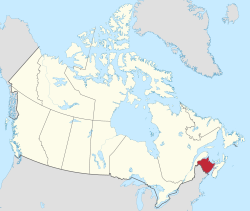
Location of New Brunswick in Canada
New Brunswick is the eighth-most populous province in Canada, with 775,610 residents as of the 2021 census, and the third-smallest province by land area, at 71,248.50 km2 (27,509.20 mi2). New Brunswick's 104 municipalities, as of 2021, covered only 10.9% of the province's land mass but were home to 69.5% of its population.
Local governments in New Brunswick may be incorporated under the Local Governance Act of 2017. Local governments include municipalities – cities, towns, and villages – as well as rural communities and regional municipalities. Municipal governments are led by elected councils and are responsible for the delivery of services such as civic administration, land use planning, emergency measures, policing, road, and garbage collection. (Full article...) - Image 3

Freedom House ratings for European Union and surrounding states, as of 2024.Partly freeNot freeNon-EU member states are marked by a brighter colour.
Member states of the European Union use various forms of democracy. The European Union (EU) is a sui generis supranational union of states. At a European Council Summit held in Copenhagen, Denmark, on 21 June and 22 June 1993, the European Union defined the Copenhagen criteria regarding the conditions a candidate country has to fulfill to be considered eligible for accession to the European Union:
Consequently, all member states have direct elections, nominally democratic states that are considered to be "free" or "partly free" according to the criteria of Freedom House. As of 2020, there is no expert consensus on how to classify Hungary's regime type; Freedom House considers it a hybrid regime. As of 2015, all European Union member states are representative democracies; however, they do not all have the same political system, with most of the differences arising from different historical backgrounds. (Full article...) - Image 4
 Privy Seal of the State of Wisconsin
The lieutenant governor of Wisconsin is the first person in the line of succession of Wisconsin's executive branch, thus serving as governor in the event of the death, resignation, removal, impeachment, absence from the state, or incapacity due to illness of the governor of Wisconsin.
Forty-one individuals have held the office of lieutenant governor since Wisconsin's admission to the Union in 1848, two of whom—Warren Knowles and Jack Olson—have served for non-consecutive terms. The first lieutenant governor was John Holmes, who took office on June 7, 1848. The current lieutenant governor is Sara Rodriguez, who took office on January 3, 2023. (Full article...) - Image 5
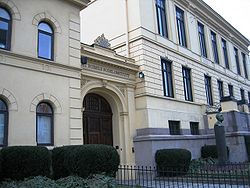
The Norwegian Nobel Institute assists the Norwegian Nobel Committee in selecting recipients of the Nobel Peace Prize and in organising the annual award in Oslo.
The Norwegian Nobel Committee awards the Nobel Peace Prize annually "to the person who shall have done the most or the best work for fraternity between nations, for the abolition or reduction of standing armies and for the holding and promotion of peace congresses." As dictated by Alfred Nobel's will, the award is administered by the Norwegian Nobel Committee and awarded by a committee of five people elected by the Parliament of Norway.
Each recipient receives a medal, a diploma, and a monetary award prize (that has varied throughout the years). It is one of the five prizes established by the 1895 will of Alfred Nobel (who died in 1896), awarded for outstanding contributions in chemistry, physics, literature, physiology or medicine. (Full article...) - Image 6This is a list of sovereign states without armed forces. Dependent territories (such as Bermuda, Guam, and the Northern Mariana Islands) whose defence is the responsibility of another country or an army alternative are excluded. The term armed forces refers to any government-sponsored defense used to further the domestic and foreign policies of their respective government. Some of the countries listed, such as Iceland and Monaco, have no standing armies but still have a non-police military force.
Many of the 21 countries listed here typically have had a long-standing agreement with a former colonial or protecting power; one example of the latter is the agreement between Monaco and France, which has existed for at least 300 years.
Similarly, the Compact of Free Association countries of the Federated States of Micronesia (FSM), the Marshall Islands, and Palau rely on the United States for their defence. They ensure their national security concerns are addressed through annual Joint Committee Meetings to discuss defence matters with the U.S. Indo-Pacific Command. Andorra has a small army, and can request defensive aid if necessary, while Iceland has a unique agreement since 1951 with the United States which requires them to provide defence to Iceland when needed, although permanent armed forces have not been stationed there since 2006. (Full article...) - Image 7

La Fortaleza, the official residence of the governor of Puerto Rico since the 16th century
This list of governors of Puerto Rico includes all persons who have held the office of Governor of Puerto Rico since its establishment under the rule of the Spanish Empire (1508–1898) to the present under the sovereignty of the United States (1898–present).
The archipelago and island of Puerto Rico was annexed by the United States during the Spanish–American War in 1898, ending 390 years of active rule by the Spanish Empire, which began the European exploration, colonization, and settlement of the main island under conquistador Juan Ponce de León in 1508. Ponce de León was the first person to hold the title and office of governor by orders of King Ferdinand II of Aragon in 1509. The governor remained an appointee of the Spanish Crown during Spanish rule, and was an appointee of the President of the United States during American rule until 1948, when the residents of Puerto Rico began to popularly elect the governor, starting with Luis Muñoz Marín, who took office in 1949. (Full article...) - Image 8Until the 18th century, Bombay consisted of seven islands separated by shallow sea. These seven islands were part of a larger archipelago in the Arabian sea, off the western coast of India. The date of city's founding is unclear—historians trace back urban settlement to the late 17th century after the British secured the seven islands from the Portuguese to establish a secure base in the region. The islands provided the British with a sheltered harbour for trade, in addition to a relatively sequestered location that reduced the chances of land-based attacks. Over the next two centuries, the British dominated the region, first securing the archipelago from the Portuguese, and later defeating the Marathas to secure the hinterland.
Bombay Presidency was one of the three Presidencies of British India; the other two being Madras Presidency, and Bengal Presidency. It was in the centre-west of the Indian subcontinent on the Arabian Sea. It was bordered to the north-west, north, and north-east by Baluchistan province, Punjab province, and Rajputana Agency; to the east by Central India Agency, the Central Provinces and Berar and Hyderabad State; and to the south by Madras Presidency and Mysore State. The Presidency was established in the late 17th century and named after Bombay, the capital city and the island on which it was built. By 1906, the area under the jurisdiction of Bombay Presidency stretched from North Canara in the south to Sindh in the north, encompassing the now-Pakistani province of Sindh, some parts of the present-day state of Gujarat, northwestern part of Karnataka state, the British Aden protectorate in Yemen, and the western two-thirds of modern-day Maharashtra. (Full article...) - Image 9

France was ruled by monarchs from the establishment of the kingdom of West Francia in 843 until the end of the Second French Empire in 1870, with several interruptions.
Classical French historiography usually regards Clovis I, king of the Franks (r. 507–511), as the first king of France. However, most historians today consider that such a kingdom did not begin until the establishment of West Francia, after the fragmentation of the Carolingian Empire in the 9th century. (Full article...) - Image 10
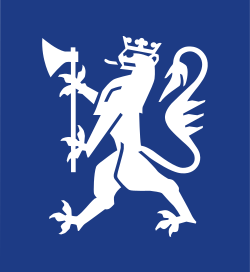
The Minister of Transport (Norwegian: Samferdelsministeren) is a Councillor of State and Chief of the Norwegian Ministry of Transport. The post has been held by Jon-Ivar Nygård of the Labour Party since 2021. The ministry is responsible for policy and public operations within postal services, telecommunications, civil aviation, public roads, rail transport, and public transport, including ferry services that are part of national roads and coastal transport infrastructure. The ministry has seven agencies and four limited companies, including the airport operator Avinor, railway operator Vy, the Norwegian National Rail Administration, the Norwegian Public Roads Administration, and Norway Post. There are also inspectorates and authorities related to accident investigation, civil aviation, and railways.
The position was created with the ministry on 22 February 1946, when Nils Langhelle (Labour) was appointed. The ministry and minister positions were split out from the Ministry of Labour. Twenty-eight people have held the position, representing six parties. Sixteen people have represented the Labour Party, five for the Centre Party, two for the Christian Democratic Party, the Conservative Party, and the Liberal Party, and one for the Progress Party. Kjell Opseth (Labour) is the longest-sitting minister, who sat a week short of six years. Lars Leiro (Centre) sat for only four weeks, giving him the shortest tenure. He both succeeded and preceded Trygve Bratteli, the only person to have held the position twice and the only officeholder to later become Prime Minister. (Full article...) - Image 11

Alabama municipalities
The U.S. state of Alabama has 67 counties. Each county serves as the local level of Alabama government within its borders. The land enclosed by the present state borders was joined to the United States of America gradually. Following the American Revolutionary War, West Florida was ceded to Spain by treaty while the remainder was organized primarily as the Mississippi Territory, and later the Alabama Territory. The territorial assembly established some of the earliest county divisions that have survived to the present, including the earliest county formation, that of Washington County, created on June 4, 1800. In 1814, the Treaty of Fort Jackson opened the territory to American settlers, which in turn led to a more rapid rate of county creation. Alabama was admitted to the Union as the 22nd state in 1819. The Alabama state legislature formed additional counties from former native lands as the Indian Removal Act took effect and settlers populated different areas of Alabama. In 1820, Alabama had 29 counties. By 1830 there were 36 and Native Americans still occupied large areas of land in northeast and far western Alabama. By 1840, 49 counties had been created; 52 by 1850; 65 by 1870; and the present 67 counties by 1903. Houston County was the last county created in the state, on February 9, 1903.
According to 2025 U.S. Census data, the average population of Alabama's 67 counties is 77,509, with Jefferson County as the most populous (665,742), and Greene County (7,067) the least. The average land area is 756 sq mi (1,958 km2). The largest county is Baldwin (1,590 sq mi, 4,118 km2) and the smallest is Etowah (535 sq mi, 1,386 km2). The Constitution of Alabama requires that any new county in Alabama cover at least 600 square miles (1,600 km2) in area, effectively limiting the creation of new counties in the state. (Full article...) - Image 12The Parliament of Canada is the legislative body of the government of Canada. The Parliament is composed of the House of Commons (lower house), the Senate (upper house), and the sovereign, represented by the governor general. Most major legislation originates from the Commons, as it is the only body that is directly elected. A new parliament begins after an election of the House of Commons and can sit for up to five years. The number of seats in parliament has varied as new provinces joined the country and as population distribution between the provinces changed; there are currently 343 House MPs and 105 Senators (when there are no vacancies).
Canada uses a Westminster-style parliamentary government, in which the leader of the party with the most seats in the House of Commons becomes Prime Minister, even if the leader is not an elected member of parliament. The leader of the party with the second-most seats in the House becomes the leader of the Official Opposition, and debate (formally called Oral Questions) between the parties is presided over by the speaker of the House. When the party with the most seats has less than half of the total number of seats, it forms a minority government, which can be voted out of power by the other parties. The Canadian Parliament is located at Parliament Hill in the capital city, Ottawa, Ontario. (Full article...) - Image 13

There are fourteen counties in the U.S. state of Vermont. These counties together contain 255 political units, or places, including 237 towns, 10 cities, 5 unincorporated areas, and 4 gores. Each county has a county seat, often referred to as a "shire town."
In 1779, Vermont had two counties. The western side of the state was Bennington County and the eastern was Cumberland County. In 1781, three new counties (including then-called Washington that became part of New Hampshire) were created out of Cumberland County, and the remainder of the county was renamed Windham.
Today's Washington County was created in 1810 as Jefferson County; it was renamed Washington in 1814. (Full article...) - Image 14
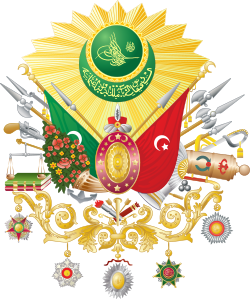 Imperial coat of arms (from 1882)
The sultans of the Ottoman Empire (Turkish: Osmanlı padişahları), who were all members of the Ottoman dynasty (House of Osman), ruled over the transcontinental empire from its perceived inception in 1299 to its dissolution in 1922. At its height, the Ottoman Empire spanned an area from Hungary in the north to Yemen in the south and from Algeria in the west to Iraq in the east. Administered at first from the city of Söğüt from before 1280 and then from the city of Bursa from 1323 or 1324, the empire's capital was moved to Adrianople (now known as Edirne in English) in 1363 following its conquest by Murad I and then to Constantinople (present-day Istanbul) in 1453 following its conquest by Mehmed II.
The Ottoman Empire's early years have been the subject of varying narratives, due to the difficulty of discerning fact from legend. The empire came into existence at the end of the 13th century, and its first ruler (and the namesake of the Empire) was Osman I. According to later, often unreliable Ottoman tradition, Osman was a descendant of the Kayı tribe of the Oghuz Turks. The eponymous Ottoman dynasty he founded endured for six centuries through the reigns of 36 sultans. The Ottoman Empire disappeared as a result of the defeat of the Central Powers, with whom it had allied itself during World War I. The partitioning of the Empire by the victorious Allies and the ensuing Turkish War of Independence led to the abolition of the sultanate in 1922 and the birth of the modern Republic of Turkey in 1922. (Full article...) - Image 15
The attorney general of West Virginia is the chief legal advisor to the West Virginia state government and is the state's chief law enforcement officer. The office was created by Article VII, Section 1 of the first Constitution of West Virginia in 1863. Under the current state constitution (1872), the attorney general is an executive department-level state constitutional officer, along with the governor, secretary of state, auditor, treasurer, and commissioner of agriculture. The attorney general is the ex officio reporter of the Supreme Court of Appeals of West Virginia. The constitution further specifies that the attorney general shall reside in the seat of state government, Charleston, during their term of office. In Charleston, they are to maintain public records, books, and papers pertaining to their office, and perform all duties prescribed by state law. As of 2012,[update] the attorney general receives a salary of $95,000 per year.
The attorney general gives their written opinions and advice upon questions of law to state officials, heads of state institutions, and prosecuting attorneys. They are also responsible for all litigation on behalf of the state government and state agencies and departments. The attorney general represents the state in all claims processed by the United States Court of Claims, prosecutes civil actions as prescribed by law, enforces the state consumer, antitrust, and preneed burial statutes, and enforces the West Virginia Human Rights Act and the West Virginia Fair Housing Act. The attorney general is also an ex officio member of the Board of Public Works, Council of Finance and Administration, Public Land Corporation, West Virginia Housing Fund, West Virginia Sheriff's Bureau, Department of Public Safety Retirement Board, Bid Suspension Review Board, State Building Commission, Commission on Charitable Contributions, Women's Commission, Multistate Tax Compact Advisory Committee, Records Management, and Preservation Advisory Committee. (Full article...)


.jpg)


Selected quote
Communists do not fight for personal military power (they must in no circumstances do that, and let no one ever again follow the example of Chang Kuo-tao), but they must fight for military power for the Party, for military power for the people. As a national war of resistance is going on, we must also fight for military power for the nation. Where there is naivety on the question of military power, nothing whatsoever can be achieved. It is very difficult for the labouring people, who have been deceived and intimidated by the reactionary ruling classes for thousands of years, to awaken to the importance of having guns in their own hands. Now that Japanese imperialist oppression and the nation-wide resistance to it have pushed our labouring people into the arena of war, Communists should prove themselves the most politically conscious leaders in this war. Every Communist must grasp the truth, "Political power grows out of the barrel of a gun." Our principle is that the Party commands the gun, and the gun must never be allowed to command the Party. Yet, having guns, we can create Party organizations, as witness the powerful Party organizations which the Eighth Route Army has created in northern China. We can also create cadres, create schools, create culture, create mass movements. Everything in Yenan has been created by having guns. All things grow out of the barrel of a gun. According to the Marxist theory of the state, the army is the chief component of state power. Whoever wants to seize and retain state power must have a strong army. Some people ridicule us as advocates of the "omnipotence of war". Yes, we are advocates of the omnipotence of revolutionary war; that is good, not bad, it is Marxist. The guns of the Russian Communist Party created socialism. We shall create a democratic republic. Experience in the class struggle in the era of imperialism teaches us that it is only by the power of the gun that the working class and the labouring masses can defeat the armed bourgeoisie and landlords; in this sense we may say that only with guns can the whole world be transformed. We are advocates of the abolition of war, we do not want war; but war can only be abolished through war, and in order to get rid of the gun it is necessary to take up the gun. — Mao Zedong, Problems of war and strategy, 1938 |
Selected biography

Ramón Emeterio Betances was a Puerto Rican nationalist. He was the primary instigator of the Grito de Lares revolution and, as such, is considered to be the father of the Puerto Rican independence movement. Betances was also the most renowned medical doctor and surgeon of his time in Puerto Rico, and one of its first social hygienists. He had established a successful surgery and ophthalmology practice. Betances was also a diplomat, public health administrator, poet and novelist. He served as representative and contact for Cuba and the Dominican Republic in Paris. A firm believer in Freemasonry, his political and social activism was deeply influenced by the group's philosophical beliefs. His personal and professional relationships (as well as the organizational structure behind the Grito de Lares, an event that, in theory, clashes with traditional Freemason beliefs) were based upon his relationships with Freemasons, their hierarchical structure, rites and signs.
Did you know (auto-generated) - load new batch

- ... that Framoi Bérété founded a political party with Ahmed Sékou Touré, but later lost his seat in parliament to another party founded by Sékou Touré?
- ... that Valentina Bodrug-Lungu has declared that Moldova's political climate does not encourage female participation, despite having a woman president?
- ... that although Uzun-Hajji and Najmuddin of Gotzo were originally political allies, they later fought on opposing sides of the Russian Civil War?
- ... that Pocatello mayor Les Purce was the first African-American political officeholder in Idaho?
- ... that artist Tove Jansson based the children's book character Snufkin on a political philosopher whom she had dated?
- ... that political strategist Morris Katz stated that any Democrat "who's scared to congratulate" Zohran Mamdani "is very unlikely to be the nominee for president in 2028"?
More did you know...

- ...that in the 1930s, Australia was home to a paramilitary Fascist organization called the New Guard?
- ...that politicians discuss the ways in which they and their families have suffered because of Oprahization?
- ...that Democratic and Republican plans for the 2012 United States federal budget both focus on deficit reduction, but differ in their changes to taxation, entitlement programs, and research funding?
- ...that Conservative Party candidate Bernard Trottier won a seat in the 41st Canadian Parliament by defeating the incumbent Leader of the Liberal Party of Canada in the 2011 federal election?
- ...that depending on a time and place, the same social movement may be revolutionary or not?
- ...that the Proletarian Revolutionary Organisation of Nepal proposed a synthesis of Buddhism and Maoism in 1977?
In this month
- May 5, 2005 – A General Election in the United Kingdom sees Tony Blair's Labour government returned to office with a reduced majority of 66.
- May 14, 1948 – The Declaration of Independence of Israel is made.
- May 18, 1948 – The first Legislative Yuan of the Republic of China officially convenes in Nanking.
News and Current events

- August 11: 4 local government areas in New South Wales, Australia locked down after COVID-19 case
- August 11: Australia: AstraZeneca vaccine access expanded by Victorian government
- August 1: Australia: Victorian lockdown lifted
- July 29: Tunisia's president dismisses prime minister, suspends parliament
- July 25: Australia: Wikinews interviews Reg Kidd, mayor of the City of Orange, about COVID-19 lockdown and local government
- July 23: South Australia enters week-long lockdown to contain COVID-19 Delta variant spread
- July 21: Technological University Dublin senior lecturer Dr Lorcan Sirr speaks to Wikinews on housing market in Ireland
- July 21: Three rural councils in New South Wales, Australia enter 7-day lockdown
- July 21: Australia: Victoria lockdown extended by a week with 85 active cases recorded
- July 15: California governor signs new state budget, eligible Californians to get stimulus payments
Topics and categories
General images
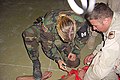 Image 1US Military Police officer restraining and sedating prisoner while a soldier holds him down (from Political corruption)
 Image 2Reformers like the American Joseph Keppler depicted the Senate as controlled by the giant moneybags, who represented the nation's financial trusts and monopolies. (from Political corruption)
 Image 4World map with the concepts of Heartland and Rimland applied (from Geopolitics)
 Image 5Montenegro's former president Milo Đukanović is often described as having strong links to Montenegrin mafia. (from Political corruption)
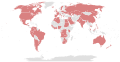 Image 7Countries with politicians, public officials or close associates implicated in the Panama Papers leak on April 15, 2016 (from Political corruption)
 Image 8A world map distinguishing countries of the world as federations (green) from unitary states (blue), a work of political science (from Political science)
 Image 9This is the divide of the different political parties in Estonia where in the 2013 elections, over 133,000 people (roughly 21.2% of participating voters) voted over the Internet. The 2013 elections were also the first elections to allow vote verification with mobile devices. (from Politics and technology)
 Image 10A memorial to the Great Famine (Ireland), a famine event in Ireland that faced elongated suffering from the UK's domestic policy failures at the time under the Prime Ministers Sir Robert Peel and Lord John Russell. (from Health politics)
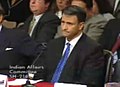 Image 11American lobbyist and businessman Jack Abramoff was at the center of an extensive corruption investigation. (from Political corruption)
 Image 12Elizabeth Warren and Bernie Sanders campaigning for extended US Medicare coverage in 2017. (from Health politics)
 Image 13Ferdinand Marcos (pictured with his daughter Imee) was a Philippine dictator and kleptocrat. His regime was infamous for its corruption. (from Political corruption)
 Image 14Sir Halford Mackinder's Heartland concept showing the situation of the "pivot area" established in the Theory of the Heartland. He later revised it to mark Northern Eurasia as a pivot while keeping area marked above as Heartland. (from Geopolitics)
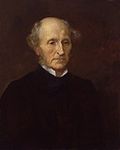
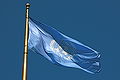 Image 17The Flag of the United Nations flying at United Nations Plaza in the Civic Center, San Francisco, California. The UN is one of the key organizations in the process of the political globalization. (from Political globalization)
 Image 18The logo and slogan for change.org (from Politics and technology)
 Image 20Candlelight protest against South Korean President Park Geun-hye in Seoul, South Korea, January 2017 (from Political corruption)

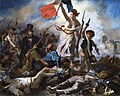 Image 23Eugène Delacroix's Liberty Leading the People (1830, Louvre), a painting created at a time where old and modern political philosophies came into violent conflict. (from History of political thought)
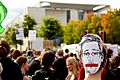 Image 24Protesters in support of American whistleblower Edward Snowden, Berlin, Germany, August 2014 (from Political corruption)
 Image 25Russia handing over the symbolic relay baton for the hosting rights of the 2022 FIFA World Cup to Qatar in June 2018 (from Political corruption)
 Image 26Malaysia's former Prime Minister Najib Razak was found guilty in the corruption trial over the multi-billion-dollar 1MDB scandal. He is currently serving his sentence in Kajang Prison. (from Political corruption)
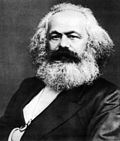 Image 27Karl Marx and his theory of Communism, developed with Friedrich Engels, proved to be one of the most influential political ideologies of the 20th century. (from History of political thought)
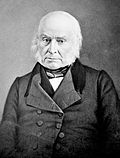 Image 28The sixth president of the United States, John Quincy Adams' "corrupt bargain" of 1824 is an example of patronage. (from Political corruption)
 Image 29Detail from Corrupt Legislation (1896) by Elihu Vedder. Library of Congress Thomas Jefferson Building, Washington, D.C. (from Political corruption)
 Image 30Savka Dabčević-Kučar, Croatian Spring participant; Europe's first female prime minister (from Civil and political rights)


,_écrivain_et_homme_politique_-_P1679_-_Musée_Carnavalet_(cropped).jpg)


.jpg)


.jpeg)


_(2).jpg)


Related portals


.svg)


Associated Wikimedia
The following Wikimedia Foundation sister projects provide more on this subject:
-
 Commons
Free media repository -
 Wikidata
Free knowledge base -
 Wikiquote
Collection of quotations -
 Wikisource
Free-content library -
 Wikiversity
Free learning tools -
 Wiktionary
Dictionary and thesaurus


