ENSIKLOPEDIA
Portal:History of Science
 | Portal maintenance status: (June 2018)
|
The History of Science Portal
The history of science covers the development of science from ancient times to the present. It encompasses all three major branches of science: natural, social, and formal. Protoscience, early sciences, and natural philosophies such as alchemy and astrology that existed during the Bronze Age, Iron Age, classical antiquity and the Middle Ages, declined after the emergence of modern sciences during the Scientific Revolution.
The earliest roots of scientific thinking and practice can be traced to Ancient Egypt and Mesopotamia during the 3rd and 2nd millennia BCE. These civilizations' contributions to mathematics, astronomy, and medicine influenced later Greek natural philosophy of classical antiquity, wherein formal attempts were made to provide explanations of events in the physical world based on natural causes. After the fall of the Western Roman Empire, knowledge of Greek conceptions of the world deteriorated in Latin-speaking Western Europe during the early centuries (400 to 1000 CE) of the Middle Ages, but continued to thrive in the Greek-speaking Byzantine Empire. Aided by translations of Greek texts, the Hellenistic worldview was preserved and absorbed into the Arabic-speaking Muslim world during the Islamic Golden Age. The recovery and assimilation of Greek works and Islamic inquiries into Western Europe from the 10th to 13th century revived the learning of natural philosophy in the West. Traditions of early science were also developed in ancient India and separately in ancient China, the Chinese model having influenced Vietnam, Korea and Japan before Western exploration. Among the Pre-Columbian peoples of Mesoamerica, the Zapotec civilization established their first known traditions of astronomy and mathematics for producing calendars, followed by other civilizations such as the Maya.
Natural philosophy was transformed by the Scientific Revolution that transpired during the 16th and 17th centuries in Europe, as new ideas and discoveries departed from previous Greek conceptions and traditions. The New Science that emerged was more mechanistic in its worldview, more integrated with mathematics, and more reliable and open as its knowledge was based on a newly defined scientific method. More "revolutions" in subsequent centuries soon followed. The chemical revolution of the 18th century, for instance, introduced new quantitative methods and measurements for chemistry. In the 19th century, new perspectives regarding the conservation of energy, age of Earth, and evolution came into focus. And in the 20th century, new discoveries in genetics and physics laid the foundations for new sub disciplines such as molecular biology and particle physics. Moreover, industrial and military concerns as well as the increasing complexity of new research endeavors ushered in the era of "big science," particularly after World War II. (Full article...)
Selected article - show another

The history of virology – the scientific study of viruses and the infections they cause – began in the closing years of the 19th century. Although Edward Jenner and Louis Pasteur developed the first vaccines to protect against viral infections, they did not know that viruses existed. The first evidence of the existence of viruses came from experiments with filters that had pores small enough to retain bacteria. In 1892, Dmitri Ivanovsky used one of these filters to show that sap from a diseased tobacco plant remained infectious to healthy tobacco plants despite having been filtered. Martinus Beijerinck called the filtered, infectious substance "contagium vivum fluidum." Although the particles could not be seen yet, his discovery is considered to be the beginning of virology.
The subsequent discovery and partial characterization of bacteriophages by Frederick Twort and Félix d'Herelle further catalyzed the field, and by the early 20th century many viruses had been discovered. In 1926, Thomas Milton Rivers defined viruses as obligate parasites. Viruses were demonstrated to be particles, rather than a fluid, by Wendell Meredith Stanley, and the invention of the electron microscope in 1931 allowed their complex structures to be visualised. (Full article...)
Selected image

In this detail from an early 14th century copy of Euclid's Elements, a woman is shown teaching geometry. It is a detail of a scene in the bowl of the letter 'P'; the woman, with a set-square and dividers, uses a compass to measure distances on a diagram. In her left hand she holds a square, an implement for testing or drawing right angles. She is watched by a group of students. In images from the Middle Ages, it is unusual to see women represented as teachers, in particular when the students appear to be monks. She may be the personification of Geometry.
Did you know
...that the travel narrative The Malay Archipelago, by biologist Alfred Russel Wallace, was used by the novelist Joseph Conrad as a source for his novel Lord Jim?
...that the seventeenth century philosophers René Descartes, Baruch Spinoza, and Gottfried Leibniz, along with their Empiricist contemporary Thomas Hobbes all formulated definitions of conatus, an innate inclination of a thing to continue to exist and enhance itself?
...that according to the controversial Hockney-Falco thesis, the rise of realism in Renaissance art, such as Jan Van Eyck's Arnolfini Portrait (pictured), was largely due to the use of curved mirrors and other optical aids?
Selected Biography - show another

Benjamin Franklin (January 17, 1706 [O.S. January 6, 1705] – April 17, 1790) was an American polymath: a writer, scientist, inventor, statesman, diplomat, printer, publisher and political philosopher. Among the most influential intellectuals of his time, Franklin was one of the Founding Fathers of the United States; a drafter and signer of the Declaration of Independence; and the first postmaster general.
Born in the Province of Massachusetts Bay, Franklin became a successful newspaper editor and printer in Philadelphia, the leading city in the colonies, publishing The Pennsylvania Gazette at age 23. He became wealthy publishing this and Poor Richard's Almanack, which he wrote under the pseudonym "Richard Saunders". After 1767, he was associated with the Pennsylvania Chronicle, a newspaper known for its revolutionary sentiments and criticisms of the policies of the British Parliament and the Crown. He pioneered and was the first president of the Academy and College of Philadelphia, which opened in 1751 and later became the University of Pennsylvania. He organized and was the first secretary of the American Philosophical Society and was elected its president in 1769. He was appointed deputy postmaster-general for the British colonies in 1753, which enabled him to set up the first national communications network. (Full article...)
Selected anniversaries
- 1749 - Birth of Edward Jenner, English physician and developer of the smallpox vaccine (d. 1823)
- 1758 - Birth of John St Aubyn, British fossil collector (d. 1839)
- 1765 - Death of Alexis Claude Clairault, French mathematician (b. 1713)
- 1897 - Birth of Odd Hassel, Norwegian chemist and Nobel Prize laureate (d. 1981)
- 1902 - Archaeologist Valerios Stais finds the Antikythera mechanism.
- 1916 - Death of Boris Borisovich Galitzine, Russian physicist (b. 1862)
- 1943 - The United States Army contracts with the University of Pennsylvania's Moore School to develop the ENIAC.
- 1969 - The Soviet spaceprobe Venera 6 begins its descent into the atmosphere of Venus, sending back atmospheric data before being crushed by pressure.
- 2004 - The Stockholm Convention, an international treaty limiting the use of DDT and other persistent organic pollutants, goes into effect.
Related portals


Topics
| Background |  | |
|---|---|---|
| By era | ||
| By culture | ||
| Natural sciences | ||
| Mathematics | ||
| Social sciences | ||
| Technology | ||
| Medicine | ||


General images
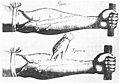 Image 1Image of veins from William Harvey's Exercitatio Anatomica de Motu Cordis et Sanguinis in Animalibus. Harvey demonstrated that blood circulated around the body, rather than being created in the liver. (from Scientific Revolution)
 Image 2Apollonius wrote a comprehensive study of conic sections in the Conics. (from Science in classical antiquity)
 Image 3A coloured illustration from Mansur's Anatomy, c. 1450 (from Science in the medieval Islamic world)
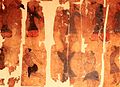 Image 5The physical exercise chart; a painting on silk depicting calisthenics; unearthed in 1973 in Hunan, China, from the 2nd-century BC Western Han burial site of Mawangdui, Tomb Number 3 (from Science in the ancient world)
 Image 6Page from the Kitāb al-Hayawān (Book of Animals) by Al-Jahiz. Ninth century (from Science in the medieval Islamic world)
 Image 7Ptolemaic model of the spheres for Venus, Mars, Jupiter, and Saturn. Georg von Peuerbach, Theoricae novae planetarum, 1474. (from Scientific Revolution)
 Image 9Detail showing columns of glyphs from a portion of the 2nd century AD La Mojarra Stela 1 (found near La Mojarra, Veracruz, Mexico); the left column gives a Long Count calendar date of 8.5.16.9.7, or 156 AD. The other columns visible are glyphs from the Epi-Olmec script. (from Science in the ancient world)
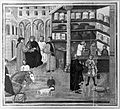 Image 10Ibn Sina teaching the use of drugs. 15th-century Great Canon of Avicenna (from Science in the medieval Islamic world)
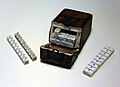 Image 12An ivory set of Napier's Bones, an early calculating device invented by John Napier (from Scientific Revolution)
 Image 14Diagram from William Gilbert's De Magnete, a pioneering 1600 work of experimental science (from Scientific Revolution)
 Image 15Portrait of Johannes Kepler, one of the founders and fathers of modern astronomy, the scientific method, natural and modern science (from Scientific Revolution)
 Image 16Universalis Cosmographia, Waldseemüller's 1507 world map, which was the first to show the Americas separate from Asia (from Scientific Revolution)
 Image 17The Tusi couple, a mathematical device invented by the Persian polymath Nasir al-Din Tusi to model the not perfectly circular motions of the planets (from Science in the medieval Islamic world)
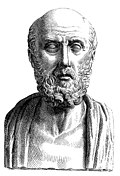 Image 18The physician Hippocrates, known as the "Father of Modern Medicine" (from Science in classical antiquity)
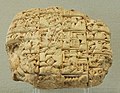 Image 19Mesopotamian clay tablet-letter from 2400 BC, Louvre (from King of Lagash, found at Girsu) (from Science in the ancient world)
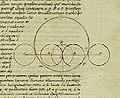 Image 20George Trebizond's Latin translation of Ptolemy's Almagest (c. 1451) (from Science in classical antiquity)
 Image 22Surviving fragment of the first World Map of Piri Reis (1513) (from Science in the medieval Islamic world)
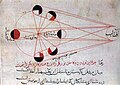 Image 23al-Biruni's explanation of the phases of the moon (from Science in the medieval Islamic world)
 Image 24Air pump built by Robert Boyle. Many new instruments were devised in this period, which greatly aided in the expansion of scientific knowledge. (from Scientific Revolution)
 Image 26 Modern copy of al-Idrisi's 1154 Tabula Rogeriana, upside-down, north at top (from Science in the medieval Islamic world)
 Image 27Diagram of the Antikythera mechanism, an analog astronomical calculator (from Science in classical antiquity)
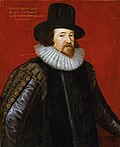 Image 28Francis Bacon was a pivotal figure in establishing the scientific method of investigation. Portrait by Frans Pourbus the Younger (1617). (from Scientific Revolution)
 Image 29Ancient India was an early leader in metallurgy, as evidenced by the wrought iron Pillar of Delhi. (from Science in the ancient world)
 Image 30An Egyptian practice of treating migraine in ancient Egypt (from Science in the ancient world)
 Image 31The four classical elements (fire, air, water, earth) of Empedocles illustrated with a burning log. The log releases all four elements as it is destroyed. (from Science in classical antiquity)
 Image 33Starting in Mainz, Germany around 1440, the movable type printing-press had spread to ~270 cities and produced more than 20 million volumes by 1500. (from Scientific Revolution)
 Image 34Detail of a portrait of Cardinal Hugh of Saint-Cher (wearing spectacles), painted by Tommaso da Modena in 1352 (from Scientific Revolution)
 Image 35Title page from The Sceptical Chymist, a foundational text of chemistry, written by Robert Boyle in 1661 (from Scientific Revolution)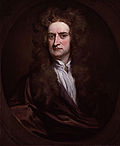

 Image 38Quince, cypress, and sumac trees, in Zakariya al-Qazwini's 13th century Wonders of Creation (from Science in the medieval Islamic world)
 Image 39Self trimming lamp in Ahmad ibn Mūsā ibn Shākir's treatise on mechanical devices, c. 850 (from Science in the medieval Islamic world)
 Image 40The first treatise about optics by Johannes Kepler, Ad Vitellionem paralipomena quibus astronomiae pars optica traditur (1604) (from Scientific Revolution)

 Image 43A mosaic depicting Plato's Academy, from the Villa of T. Siminius Stephanus in Pompeii (1st century AD) (from Science in classical antiquity)
 Image 45Matteo Ricci (left) and Xu Guangqi (right) in Athanasius Kircher, La Chine ... Illustrée, Amsterdam, 1670 (from Scientific Revolution)
 Image 48Otto von Guericke's experiments on electrostatics, published 1672 (from Scientific Revolution)
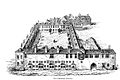 Image 49The Royal Society had its origins in Gresham College in the City of London, and was the first scientific society in the world. (from Scientific Revolution)
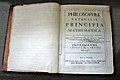 Image 50Isaac Newton's Principia developed the first set of unified scientific laws. (from Scientific Revolution)
 Image 51Omar Khayyam's "Cubic equation and intersection of conic sections" (from Science in the medieval Islamic world)
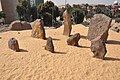 Image 52Megaliths from Nabta Playa, constructed by Neolithic populations, located in Aswan, Upper Egypt. Excavations of the megalith structures were completed in 2008. (from Science in the ancient world)
 Image 53An early Western Han (202 BC – AD 9) silk map found in tomb 3 of Mawangdui, depicting the Kingdom of Changsha and Kingdom of Nanyue in southern China (note: the south direction is oriented at the top) (from Science in the ancient world)
_Venenbild.jpg)


.jpg)


_1352_150cm,_treviso,_ex_convento_di_san_niccolò,_sala_del_capitolo.jpg)
.jpg)


.jpg)


Subcategories

Things you can do
Help out by participating in the History of Science Wikiproject (which also coordinates the histories of medicine, technology and philosophy of science) or join the discussion.

Associated Wikimedia
The following Wikimedia Foundation sister projects provide more on this subject:
-
 Commons
Free media repository -
 Wikidata
Free knowledge base -
 Wikiquote
Collection of quotations -
 Wikisource
Free-content library -
 Wikiversity
Free learning tools -
 Wiktionary
Dictionary and thesaurus


