Tropical cyclones affect the Azores once every few years. Due to the island's location and the cool sea surface temperatures, tropical cyclones usually weaken upon their approach to the islands.[1]
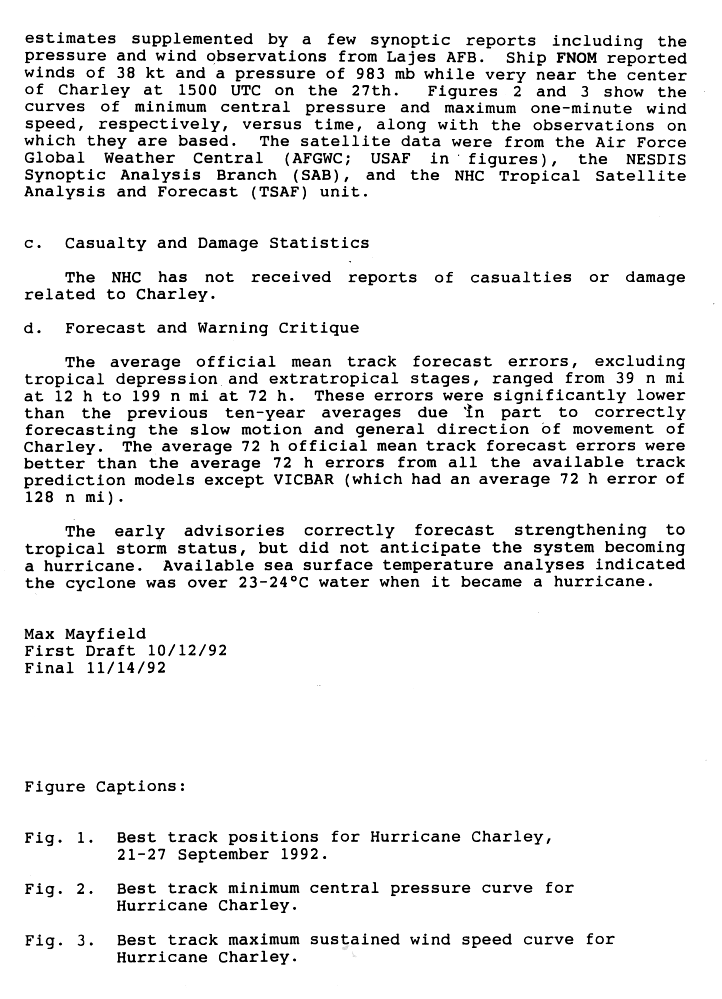
September 27, 1992–Tropical Storm Charley struck Terceira Island, producing wind gusts of 82mph (132km/h) at Lajes Field.[2]
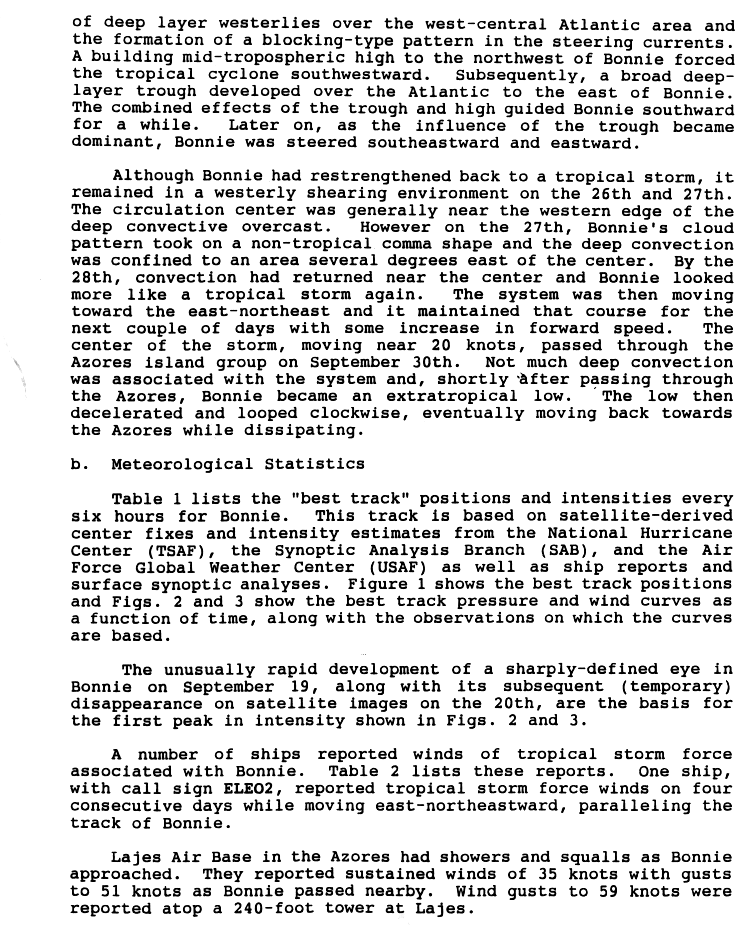
September 30, 1992–Just days after the previous storm, Tropical Storm Bonnie moved through the central Azores. Wind gusts reached 59mph (95km/h) at Lajes Field.[3] One man was killed by a rock fall on São Miguel.[4]
November 1, 1995–Tropical Storm Tanya transitioned into an extratropical storm before moving through the Azores. The storm produced wind gusts of 105mph (169km/h). Tanya knocked down trees and power lines, sank several boats, and damaged houses. A fisherman drowned amid high waves in the archipelago.[5]
September 15, 1997–Tropical Storm Erika brushed the western Azores, producing wind gusts of 105mph (169km/h) on a 200ft (61m) tower at Lajes. The storm dropped up to 2.35 inches (60mm) of rain in Flores, where gusts reached 87mph (140km/h).[6]
September 30, 1998–Tropical Storm Jeanne transitioned into an extratropical cyclone while approaching the Azores. It produced wind gusts of 40mph (64km/h) on Horta Island.[7]
2000s
Rough surf from Hurricane Alex on São Miguel Island, in the Azores
April 27, 2003–an extratropical cyclone, formerly Tropical Storm Ana, passed south of the Azores, producing 0.87 inches (22mm) of rainfall at Ponta Delgada.[8]
October 4, 2005–a subtropical storm moved through the eastern Azores,[9] producing wind gusts of 59mph (95km/h) on Santa Maria Island.[10]
September 20, 2006–Hurricane Gordon passed through the Azores between the islands of Santa Maria and São Miguel; a station on the former island recorded sustained winds of 56mph (90km/h), with gusts to 82mph (132km/h).[11] Overall impact was limited to toppled trees and power lines, leaving portions of Santa Maria Island without electrical service.[12]
October 4, 2009–an extratropical cyclone transitioned into Tropical Storm Grace near São Miguel Island, producing wind gusts of 44mph (71km/h) at Ponta Delgada on São Miguel.[13]
2010s
August 20, 2012–Hurricane Gordon made landfall on Santa Maria Island with winds of 75mph (121km/h). Gordon produced wind gusts of 81mph (130km/h) on the island, and triggered a few landslides. The winds knocked down trees, damaged windows, and briefly cut power. Waves 21ft (6.4m) in height caused flooding along the coast.[14]
September 21, 2012–Tropical Storm Nadine transitioned into an extratropical cyclone as it approached within 260mi (420km) southwest of the Azores. The storm producing wind gusts of 81mph (130km/h) on Faial Island. Nadine turned southeast away from the archipelago, and spent the next 13days moving across the eastern Atlantic Ocean. Nadine again transitioned into an extratropical cyclone on October4, and later that day moved through the central Azores, producing wind gusts of 87mph (140km/h) at the Wind Power Plant on Santa Maria.[15]
December 7, 2013–A subtropical storm approached the western Azores and degenerated into a trough. The storm produced gusts to 54mph (87km/h) on Santa Maria Island.[16]
January 14–15, 2016–Hurricane Alex made landfall on Terceira Island as a tropical storm, hours after weakening below hurricane status.[17] Rainfall totaled 4.04in (103mm) in Lagoa, São Miguel.[18] Wind gusts reached 57mph (92km/h) in Ponta Delgada.[19] One person suffering a heart attack died as an indirect result of Alex when turbulence from the storm hindered their emergency helicopter from taking off in time.[20][21] Alex triggered a few landslides, and damaged homes from its winds.[22]
September 2, 2016–Hurricane Gaston transitioned into an extratropical cyclone near the Azores, producing wind gusts of 52mph (84km/h) on Flores and Faial islands.[23]
October 14, 2017–Hurricane Ophelia passed south of the Azores as the easternmost major hurricane on record. The hurricane produced wind gusts of 44mph (71km/h) on São Miguel.[24]
September 15, 2018–Tropical Storm Helene passed west of the Azores, where it was estimated to have produced tropical storm force winds.[25]
October 2, 2019–Hurricane Lorenzo passed near the western Azores, producing wind gusts of 101mph (163km/h) on Corvo Island.[26] At the Port of Lajes das Flores port building and some cargo containers were swept away, while the dock itself was partially damaged.[27] Total damage across the island chain were around €330 million (US$362 million).[28]
October 27, 2019–Tropical Storm Pablo passed just to the southeast of the Azores as it was intensifying, bringing gusty winds as high as 55mph (89km/h) in some places and large waves to the islands.[29][30][31]
October 31, 2019–Subtropical Storm Rebekah passed to the north of The Azores as it was dissipating, bringing only negligible effects.
November 25, 2019–Tropical Storm Sebastien transitioned into an extratropical storm near the western Azores, bringing wind gusts of 55mph (89km/h) to Ponta Delgada.[32]
2020s
September 17–18, 2020–The extratropical remnants of Hurricane Paulette moved over the islands.
September 23–25, 2022–Tropical Storm Gaston passes over the islands, bringing heavy rains and wind gusts of 41mph (66km/h).[33][34]
November 2–3, 2024–Tropical Storm Patty traversed the islands as a subtropical cyclone.
September 25–26, 2025–The post-tropical remnants of Hurricane Gabrielle moved over the islands.
Climatology
Storms affecting the Azores by month
Month
Number of storms
January
1
April
1
September
10
October
4
November
3
December
1
Storms affecting the Azores by period
Period
Number of storms
1990s
5
2000s
4
2010s
11
2020s
4
Deadly storms
The following is a list of Atlantic tropical storms that caused fatalities in the Azores.
↑B. Max Mayfield; Lixion A. Avila; Edward N. Rappaport (March 1994). Atlantic Hurricane Season of 1992(PDF) (Report). National Hurricane Center. Retrieved 2013-02-25.