ENSIKLOPEDIA
P:TC
 | Portal maintenance status: (June 2018)
|
The Tropical Cyclones Portal

A tropical cyclone is a storm system characterized by a large low-pressure center, a closed low-level circulation and a spiral arrangement of numerous thunderstorms that produce strong winds and heavy rainfall. Tropical cyclones feed on the heat released when moist air rises, resulting in condensation of water vapor contained in the moist air. They are fueled by a different heat mechanism than other cyclonic windstorms such as Nor'easters, European windstorms and polar lows, leading to their classification as "warm core" storm systems. Most tropical cyclones originate in the doldrums, approximately ten degrees from the Equator.
The term "tropical" refers to both the geographic origin of these systems, which form almost exclusively in tropical regions of the globe, as well as to their formation in maritime tropical air masses. The term "cyclone" refers to such storms' cyclonic nature, with anticlockwise rotation in the Northern Hemisphere and clockwise rotation in the Southern Hemisphere. Depending on its location and intensity, a tropical cyclone may be referred to by names such as "hurricane", "typhoon", "tropical storm", "cyclonic storm", "tropical depression" or simply "cyclone".
Types of cyclone: 1. A "Typhoon" is a tropical cyclone located in the North-west Pacific Ocean which has the most cyclonic activity and storms occur year-round. 2. A "Hurricane" is also a tropical cyclone located at the North Atlantic Ocean or North-east Pacific Ocean which have an average storm activity and storms typically form between May 15 and November 30. 3. A "Cyclone" is a tropical cyclone that occurs in the South Pacific and Indian Oceans.
Selected named cyclone - show another

Cyclone Ianos, also known as Medicane Ianos, was a rare medicane that impacted the eastern Mediterranean on 17 and 18 September 2020, especially Greece. Ianos developed from an area of low pressure over the Gulf of Sidra that quickly began tropical cyclogenesis while moving over warm waters. After receiving various names from different meteorological centers, the storm, dubbed Ianos by the METEO unit of the National Observatory of Athens, rapidly intensified while moving northeastward. After scraping Italy, the storm went on to strike Malta and Crete with tropical storm-force winds. Despite land interaction, the small cyclone reached its peak intensity of 159 km/h (99 mph) with wind gusts up to 195 km/h (121 mph) on 18 September, equivalent to a Category 2 hurricane on the Saffir–Simpson scale, immediately before making landfall in southwestern Greece. After landfall, Ianos turned back out to sea and moved south-southeastward, before dissipating on 21 September.
Damage was severe in Greece, with cities in the central part of the country getting the brunt of the storm's impacts. Cities such as Karditsa and Mouzaki were flooded for several days. Heavy agricultural damage was reported in rural areas north of Athens. A state of emergency was declared for the islands of Ithaca, Kefalonia, and Zakynthos. Four people were killed, and one person remains missing. Ianos caused at least $100 million (2020 USD) in damages. (Full article...)
Selected article - show another

The central dense overcast, or CDO, of a tropical cyclone or strong subtropical cyclone is the large central area of thunderstorms surrounding its circulation center, caused by the formation of its eyewall. It can be round, angular, oval, or irregular in shape. This feature shows up in tropical cyclones of tropical storm or hurricane strength. How far the center is embedded within the CDO, and the temperature difference between the cloud tops within the CDO and the cyclone's eye, can help determine a tropical cyclone's intensity with the Dvorak technique. Locating the center within the CDO can be a problem with strong tropical storms and minimal hurricanes as its location can be obscured by the CDO's high cloud canopy. This center location problem can be resolved through the use of microwave satellite imagery.
After a cyclone strengthens to around hurricane intensity, an eye appears at the center of the CDO, defining its center of low pressure and its cyclonic wind field. Tropical cyclones with changing intensity have more lightning within their CDO than steady state storms. Tracking cloud features within the CDO using frequently updated satellite imagery can also be used to determine a cyclone's intensity. The highest maximum sustained winds within a tropical cyclone, as well as its heaviest rainfall, are usually located under the coldest cloud tops in the CDO.
(Full article...)Selected image - show another

Selected season - show another

The 1970 North Indian Ocean cyclone season was an extremely devastating North Indian cyclone season. It saw a total of seven cyclonic storms, of which three developed into severe cyclonic storms. The Bay of Bengal was more active than the Arabian Sea during 1970, with all of the three severe cyclonic storms in the season forming there. Unusually, none of the storms in the Arabian Sea made landfall this year. The most significant storm of the season was the Bhola cyclone, which formed in the Bay of Bengal and hit Bangladesh on November 12. The storm killed at least 500,000, making it the deadliest tropical cyclone in recorded history. The season was also the deadliest tropical cyclone season globally, with 500,805 fatalities, mostly due to the aforementioned Bhola cyclone.
(Full article...)Related portals


Currently active tropical cyclones
Italicized basins are unofficial.
- North Atlantic (2026)
- No active systems
- East and Central Pacific (2026)
- No active systems
- West Pacific (2026)
- No active systems
- North Indian Ocean (2026)
- No active systems
- Mediterranean (2025–26)
- No active systems
- South-West Indian Ocean (2025–26)
- No active systems
- Australian region (2025–26)
- No active systems
- South Pacific (2025–26)
- No active systems
- South Atlantic (2025–26)
- No active systems
Last updated: 00:16, 16 May 2026 (UTC)
Tropical cyclone anniversaries

May 16
- 1989 - Typhoon Brenda (pictured) passed over the Philippines, causing torrential flooding that killed at least 140 people.
- 2004 - Typhoon Nida reaches peak intensity as an intense typhoon, off the coast of eastern Philippines, causing minor damage.
- 2015 - Typhoon Dolphin reaches peak intensity, impacting the Mariana Islands with $14 million in damages.

May 17
- 1951 - Hurricane Able reached hurricane strength over The Bahamas, being one of the earliest pre-season hurricanes recorded.
- 2006 - Typhoon Chanchu (pictured) makes landfall over in Shantou, China, causing about ¥7 billion (US$872 million) in damage in the country.
- 2021 - Cyclone Tauktae struck Gujarat and affected much of western India, killing 174 people and causing US$2 billion in damage.

May 18
- 1986 - Cyclone Namu moved through the Solomon Islands, killing at least 111 people.
- 1997 - A powerful cyclone made landfall over in Bangladesh as a powerful Category 4 cyclone, killing more than 1,150 people.
- 2020 - Cyclone Amphan (pictured) reached peak intensity as a Category 5 super cyclonic storm, and two days later moved ashore near the border of India and Bangladesh. With an estimated US$13.7 billion in damages, Amphan was the costliest North Indian Ocean tropical cyclone on record.
Did you know…


- …that the Australian region have three distinct lists of names for tropical storms, each one of them being administered by agencies in Australia, Indonesia and Papua New Guinea, respectively?
- …that the Joint Typhoon Warning Center considers that Typhoon Vera (pictured) of 1986 is actually two distinct systems, formed from two separated low-level circulations?
- …that Cyclone Freddy (track pictured) in 2023 was the longest-lasting tropical cyclone recorded?
- …that the typhoons of 2024—Yinxing, Toraji, Usagi, and Man-yi (pictured)—made history as the first recorded instance since 1951 of four tropical cyclones coexisting in November?
General images - load new batch
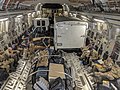 Image 1Personnel and equipment from the National Guard of the United States en route to Hurricane Florence response efforts in 2018
 Image 2Flooding in Port Arthur, Texas caused by Hurricane Harvey. Harvey was the wettest and second-costliest tropical cyclone in United States history. (from Effects of tropical cyclones)
 Image 3Radar image of Hurricane Erika making landfall over Northeastern Mexico (from Tropical cyclone observation)
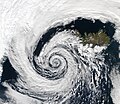 Image 4An extratropical cyclone near Iceland (from Cyclone)
 Image 6All but the most expensive bottles of water were sold out at this Publix supermarket before Hurricane Irma; in the week preceding the storm, water sold out soon after shipments arrived (from Tropical cyclone preparedness)
 Image 7Hurricane response involves working in hazardous conditions, including contamination and electrocution hazards from floodwater.
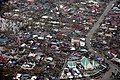 Image 8Aerial image of destroyed houses in Tacloban, following Typhoon Haiyan (from Effects of tropical cyclones)
 Image 9Chart with concurrent information for Hurricane Arlene and Tropical Storm Bret logged and plotted (from Tropical cyclone preparedness)
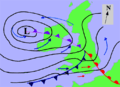 Image 11A fictitious synoptic chart of an extratropical cyclone affecting the UK and Ireland. The blue arrows between isobars indicate the direction of the wind, while the "L" symbol denotes the centre of the "low". Note the occluded, cold and warm frontal boundaries. (from Cyclone)
 Image 12Broken concrete utility pole in Puerto Rico after Hurricane Maria in 2017, which ranks fourth in costliest US tropical cyclones. (from Effects of tropical cyclones)
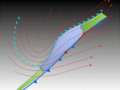 Image 13The initial extratropical low-pressure area forms at the location of the red dot on the image. It is usually perpendicular (at a right angle to) the leaf-like cloud formation seen on satellite during the early stage of cyclogenesis. The location of the axis of the upper level jet stream is in light blue. (from Cyclone)
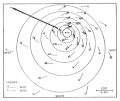 Image 14The dangerous semicircle is the upper-right corner, with the arrow marking the direction of motion of a Northern Hemisphere storm. Note that typhoons, etc. are asymmetrical, and semicircle is a convenient misnomer. (from Effects of tropical cyclones)
 Image 15The aftermath of Hurricane Katrina in Gulfport, Mississippi. (from Tropical cyclone preparedness)
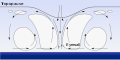 Image 16Tropical cyclones form when the energy released by the condensation of moisture in rising air causes a positive feedback loop over warm ocean waters. (from Cyclone)
 Image 17An example of a chart for Matthew showing its five-day forecast track (from Tropical cyclone preparedness)
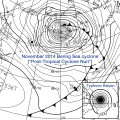 Image 18Comparison between extratropical and tropical cyclones on surface analysis (from Cyclone)
 Image 19Wind damage varies exponentially with wind speed, so that small increases in wind strength can dramatically increase damage. Damages rise by about a factor of four for every category increase in the Saffir–Simpson scale. (from Cyclone)
 Image 21Hurricane Isabel (2003)'s effect on the North Carolina Outer Banks (from Effects of tropical cyclones)
 Image 22Surface weather map of the 1935 Labor Day hurricane moving up the west coast of Florida (from Tropical cyclone observation)
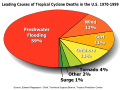 Image 23Percentages of hurricane deaths in the United States from 1970 to 1999. (from Effects of tropical cyclones)
 Image 24Effects in Buncombe County, North Carolina after Hurricane Helene passed through the area in September 2024. (from Effects of tropical cyclones)
- Image 26The aftermath of Hurricane Katrina in Gulfport, Mississippi. Katrina was the costliest tropical cyclone in United States history. (from Effects of tropical cyclones)
.jpg)
_(50).jpg)


.jpg)


_(cropped).jpg)


 Featured list - show another

_tracks.png)
Between 1900 and 1949, 108 Atlantic hurricanes have affected the U.S. state of Florida. Collectively, tropical cyclones in Florida during the time period resulted in about $4 billion (2008 USD) in damage. Additionally, tropical cyclones in Florida were directly responsible for about 3,550 fatalities during the time period, most of which were from the 1928 Okeechobee Hurricane. The 1947 season was the year with the most tropical cyclones affecting the state, with a total of 6 systems. The 1905, 1908, 1913, 1927, 1931, 1942, and 1943 seasons were the only years during the time period in which a storm did not affect the Florida coast.
The strongest hurricane to hit the state during the time period was the 1935 Labor Day hurricane, which also bears the distinction of being the strongest recorded hurricane to strike the United States. Several other major hurricanes struck the state during the time period, including the 1926 Miami hurricane, the 1928 Okeechobee hurricane, and a cyclone each in 1945, 1947, 1948, and 1949. All of these storms made landfall as Category 4 hurricanes. (Full article...)
Topics
| Concepts | |||||||||||||||||||||||||||||||||||||||||||||||
|---|---|---|---|---|---|---|---|---|---|---|---|---|---|---|---|---|---|---|---|---|---|---|---|---|---|---|---|---|---|---|---|---|---|---|---|---|---|---|---|---|---|---|---|---|---|---|---|
| Anticyclone |
| ||||||||||||||||||||||||||||||||||||||||||||||
| Cyclone |
| ||||||||||||||||||||||||||||||||||||||||||||||
Subcategories

Related WikiProjects
WikiProject Tropical cyclones is the central point of coordination for Wikipedia's coverage of tropical cyclones. Feel free to help!
WikiProject Weather is the main center point of coordination for Wikipedia's coverage of meteorology in general, and the parent project of WikiProject Tropical cyclones. Three other branches of WikiProject Weather in particular share significant overlaps with WikiProject Tropical cyclones:
- The Non-tropical storms task force coordinates most of Wikipedia's coverage on extratropical cyclones, which tropical cyclones often transition into near the end of their lifespan.
- The Floods task force takes on the scope of flooding events all over the world, with rainfall from tropical cyclones a significant factor in many of them.
- WikiProject Severe weather documents the effects of extreme weather such as tornadoes, which landfalling tropical cyclones can produce.
Things you can do
 |
Here are some tasks awaiting attention:
|
Wikimedia
The following Wikimedia Foundation sister projects provide more on this subject:
-
 Commons
Free media repository -
 Wikidata
Free knowledge base -
 Wikiquote
Collection of quotations -
 Wikisource
Free-content library -
 Wikiversity
Free learning tools -
 Wikivoyage
Free travel guide -
 Wiktionary
Dictionary and thesaurus


